Tag Archives: peptide

5-Amino-1MQ Metabolic Research: Mechanisms, Scientific Findings, and Future Directions
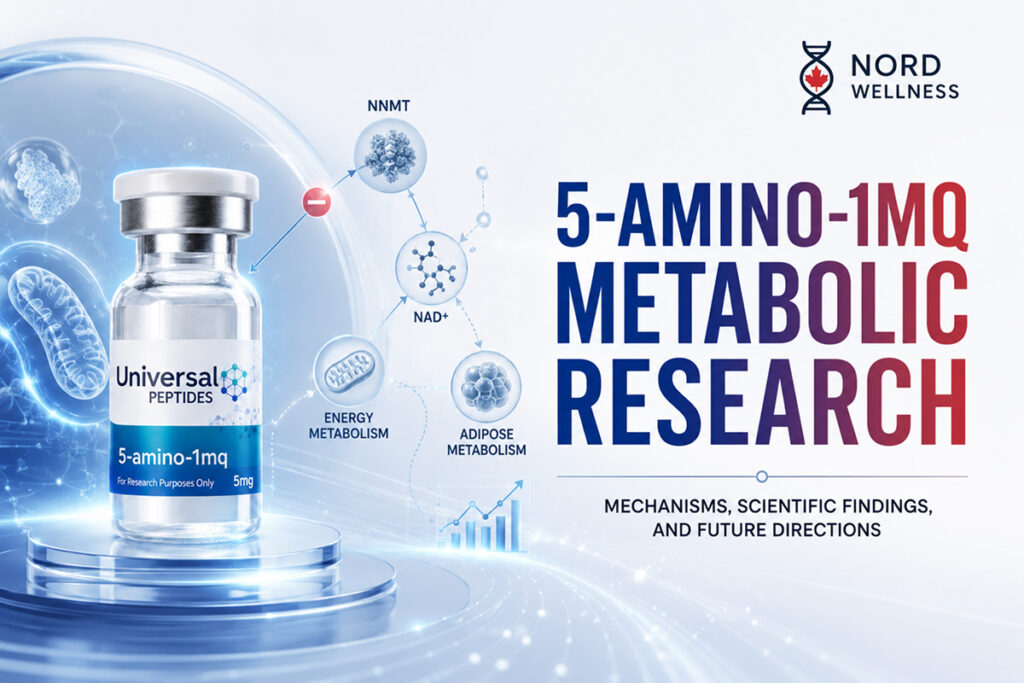
5-amino-1mq-metabolic-research

5-Amino-1MQ metabolic research focuses on nicotinamide N-methyltransferase (NNMT), an enzyme involved in nicotinamide metabolism, methyl-donor balance, and cellular energy regulation. Researchers study 5-Amino-1MQ because it inhibits NNMT and provides a way to examine how this pathway may influence NAD⁺, S-adenosylmethionine (SAM), adipocyte biology, lipid metabolism, and glucose regulation. Current evidence remains primarily preclinical, including cell […]
5-Amino-1MQ Mechanism of Action: Understanding Its Role in Metabolic Research

5-amino-1mq-mechanism-of-action

The 5-amino-1mq mechanism of action centers on inhibition of nicotinamide N-methyltransferase (NNMT), an enzyme involved in nicotinamide metabolism and cellular methyl-donor balance. By reducing NNMT activity, researchers can investigate changes in 1-methylnicotinamide (1-MNA), NAD+, S-adenosylmethionine (SAM), and adipocyte metabolism. Although frequently discussed alongside research peptides, 5-Amino-1MQ is technically a small-molecule compound rather than a peptide. […]

How 5-Amino-1MQ Works: Mechanism of Action, Metabolism, and Research Insights

how-5-amino-1mq-works

Understanding how 5-Amino-1MQ works begins with nicotinamide N-methyltransferase (NNMT), an enzyme involved in nicotinamide metabolism and cellular methyl-donor balance. 5-Amino-1MQ inhibits NNMT, allowing researchers to investigate its relationship with NAD+ metabolism, S-adenosylmethionine (SAM), adipocyte biology, and lipid accumulation. Although frequently discussed alongside research peptides, 5-Amino-1MQ is not a peptide. It is a small-molecule compound studied […]

5-Amino-1MQ Benefits: Metabolic Research, Scientific Findings, and Potential Applications

5-amino-1mq-benefits

5-Amino-1MQ benefits have attracted scientific interest because this small-molecule compound inhibits nicotinamide N-methyltransferase (NNMT), an enzyme involved in nicotinamide metabolism, methyl-donor balance, and cellular energy regulation. Although often discussed alongside research peptides, 5-Amino-1MQ is technically a small molecule rather than a peptide. Current evidence focuses mainly on cellular and animal models involving lipid accumulation, adipose […]

5-Amino-1MQ: Mechanism, Metabolic Research, Benefits, and Scientific Applications

5-amino-1mq

5-Amino-1MQ is a small-molecule research compound studied primarily for its ability to inhibit nicotinamide N-methyltransferase (NNMT), an enzyme involved in nicotinamide metabolism, methyl-donor balance, and cellular energy regulation. Although it is frequently discussed alongside research peptides, 5-Amino-1MQ is chemically a quinolinium compound rather than a peptide. For this reason, researchers study this compound because NNMT […]

BPC-157 + TB-500: Benefits, Mechanisms, Combined Research, and Applications

bpc-157-tb-500

BPC-157 + TB-500 has attracted research interest because both peptides are discussed in relation to tissue repair, cellular migration, vascular responses, and regenerative biology. However, they involve different biological pathways, and direct evidence examining them together remains limited. Current evidence comes mainly from preclinical BPC-157 studies and research involving thymosin beta-4 (Tβ4), which is closely […]

GHK-CU Research Applications: Skin, Hair, and Regenerative Research

ghk-cu-research-applications

GHK-CU research applications include skin biology, hair follicle research, tissue remodeling, cellular signaling, and regenerative processes. GHK-Cu is a naturally occurring copper-binding tripeptide formed when glycyl-L-histidyl-L-lysine binds copper ions, giving researchers a basis for studying its role across multiple biological systems. Researchers have investigated GHK-Cu across skin biology, tissue repair, hair follicle research, and regenerative […]

GHK-CU Peptide for Hair Growth Research: Mechanisms and Current Studies

ghk-cu-peptide-for-hair-growth-research

The GHK-CU peptide for hair growth research has attracted scientific interest because hair follicles depend on complex interactions between cells, signaling molecules, connective tissue, and the surrounding extracellular matrix. GHK-Cu is a naturally occurring copper-binding tripeptide studied for its potential relationship with follicular activity, cellular signaling, extracellular matrix remodeling, and tissue repair. Although researchers have […]

GHK-CU for Skin Research: Mechanisms, Benefits, and Scientific Interest

ghk-cu-for-skin-research

GHK-CU is a naturally occurring copper-binding tripeptide composed of glycine, histidine, and lysine. Due to its interaction with copper-dependent biological processes, GHK-CU for skin research has become an important area of study involving cellular signaling, collagen pathways, fibroblast activity, extracellular matrix regulation, and tissue repair. Researchers continue to investigate how these interconnected mechanisms may influence […]

GHK-CU Mechanism of Action: Understanding Its Role in Skin and Hair Research

ghk-cu-mechanism-of-action

GHK-CU is a naturally occurring copper-binding tripeptide composed of glycine, histidine, and lysine. When GHK binds copper ions, it forms the GHK-Cu complex. The GHK-CU mechanism of action is studied for its involvement in cellular signaling, antioxidant activity, extracellular matrix regulation, and tissue repair. Rather than acting through a single pathway, GHK-Cu appears to interact […]