

BPC-157, Healing & Regeneration, Peptides, TB-500
BPC-157 + TB-500: Benefits, Mechanisms, Combined Research, and Applications
Summarize the article with:
 ChatGPT
 Claude
 Perplexity
 Google AI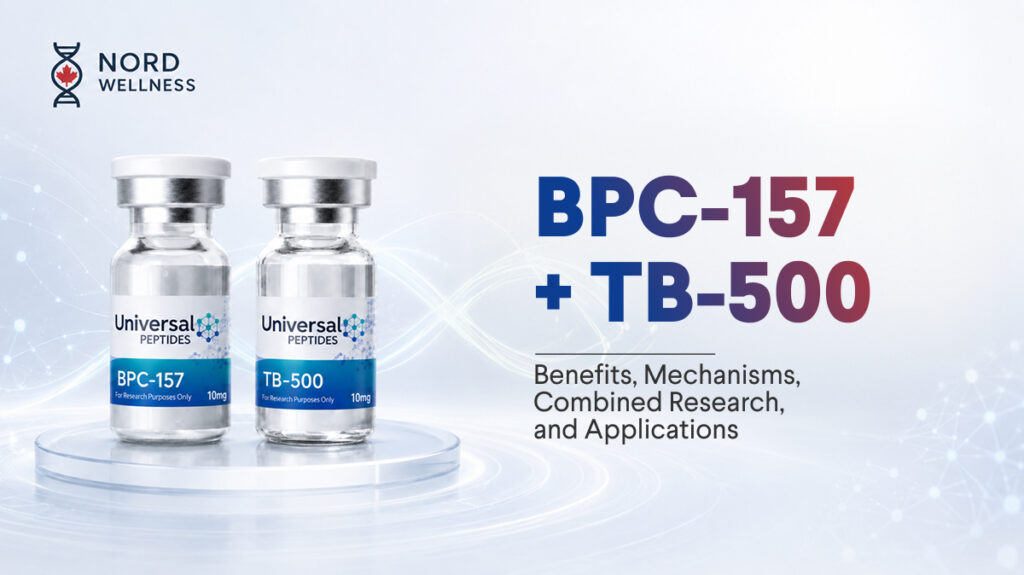
Aug
BPC-157 + TB-500 has attracted research interest because both peptides are discussed in relation to tissue repair, cellular migration, vascular responses, and regenerative biology. However, they involve different biological pathways, and direct evidence examining them together remains limited.
Current evidence comes mainly from preclinical BPC-157 studies and research involving thymosin beta-4 (Tβ4), which is closely associated with TB-500 research. Therefore, researchers should distinguish evidence for each compound and avoid assuming that combining them produces additive or synergistic effects.
Explore Nord Wellness for additional research-focused peptide information and educational resources.
What Are BPC-157 and TB-500?
BPC-157 is a synthetic 15-amino-acid peptide studied primarily in preclinical models involving tissue repair, cellular migration, vascular responses, and connective tissue biology. Experimental studies have explored its relationship with FAK–paxillin signaling, F-actin formation, nitric oxide pathways, and VEGF-related activity.
TB-500 is commonly associated with thymosin beta-4 (Tβ4), a naturally occurring 43-amino-acid peptide involved in actin regulation. Tβ4 has attracted research interest for its relationship with cellular migration, angiogenesis, wound repair, and tissue remodeling.
However, researchers should distinguish TB-500 from full-length thymosin beta-4. Much of the available mechanistic evidence concerns Tβ4 itself, so researchers should not automatically attribute all Tβ4 findings to TB-500.
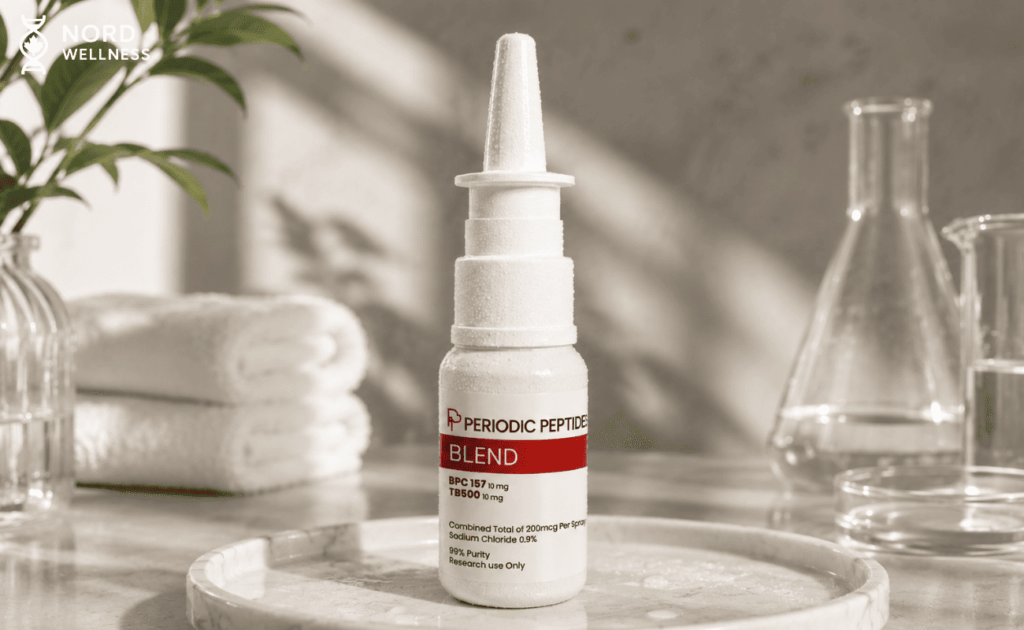
Explore BPC-157 10mg + TB-500 10mg Nasal Spray Kit for research purposes at BPC-157 10mg + TB-500 10mg Nasal Spray Kit
How BPC-157 and TB-500 Work Together
The scientific rationale for studying these two peptides together comes from the overlap between their proposed research pathways. BPC-157 studies have examined fibroblast migration, FAK–paxillin signaling, cytoskeletal changes, and vascular responses. Meanwhile, Tβ4 research focuses strongly on actin regulation, cellular movement, and angiogenesis.
These mechanisms may intersect during processes such as cell migration, cytoskeletal organization, vascular development, and tissue remodeling. As a result, researchers may investigate whether the two peptide systems influence different or complementary stages of experimental repair.
However, mechanistic overlap does not prove synergy. Direct studies examining BPC-157 and TB-500 together remain limited, so researchers cannot currently conclude that their combination produces stronger effects than either compound studied independently.
Potential Benefits of Combining Both Peptides
Potential interest in combining both peptides primarily relates to tissue repair and regenerative research. BPC-157 has shown effects involving fibroblast migration and repair-related signaling in experimental models, while Tβ4 research has investigated actin dynamics, cellular migration, angiogenesis, and wound-healing processes.
Because these pathways participate in different stages of tissue remodeling, researchers may investigate whether combining the two compounds produces complementary biological responses. Connective tissue, vascular biology, and cellular migration are particularly relevant areas for future research.
Still, these should be described as potential research effects rather than established benefits. Current evidence does not demonstrate that the combination provides superior tissue repair, recovery, or regenerative effects compared with either peptide alone.
Research Applications of the BPC-157 + TB-500 Stack
This combined peptide approach may be of interest in experimental models involving connective tissue, tendon biology, wound repair, angiogenesis, cellular migration, and regenerative processes.
BPC-157 has been studied in tendon fibroblast models involving cell migration, survival, and F-actin formation. In comparison, thymosin beta-4 research has examined cytoskeletal regulation, endothelial migration, vascular development, and tissue repair.
These overlapping areas create a reasonable basis for controlled combination studies. However, the term stack is commonly used outside formal scientific literature and should not imply that researchers have established a validated combination protocol.
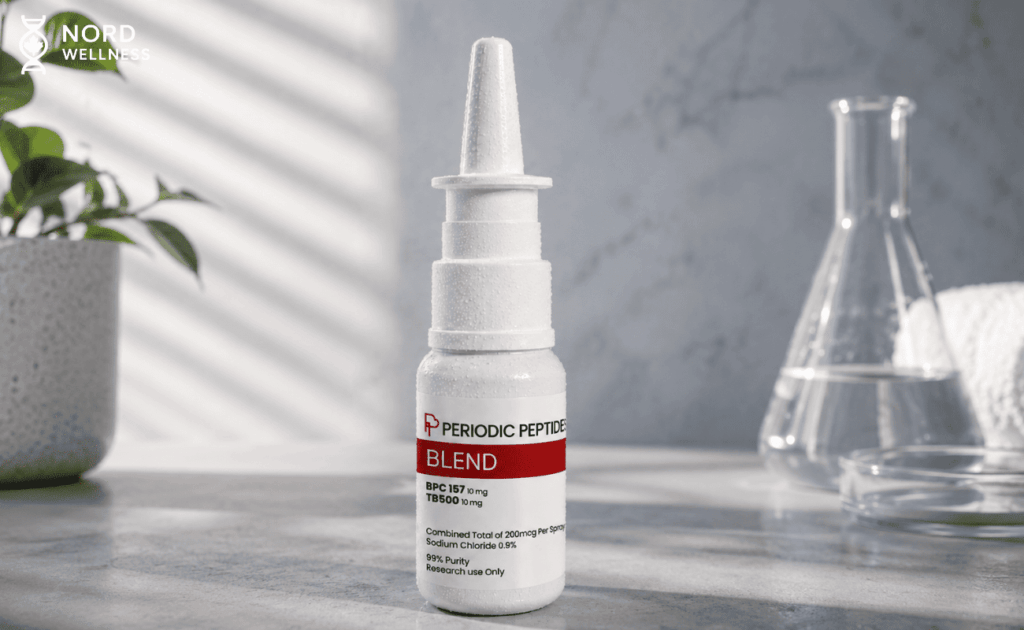
Explore BPC-157 10mg + TB-500 10mg Nasal Spray Kit for research purposes at BPC-157 10mg + TB-500 10mg Nasal Spray Kit
Current Scientific Evidence
BPC-157 research remains largely preclinical. Cell and animal studies have investigated its effects on fibroblast migration, F-actin formation, FAK–paxillin signaling, vascular responses, and several experimental tissue-injury models.
The scientific literature surrounding thymosin beta-4 is broader, particularly in actin regulation, angiogenesis, cell migration, wound healing, and tissue regeneration. However, researchers should be careful when applying these findings specifically to TB-500 because the two terms are not automatically interchangeable.
Most importantly, direct scientific evidence for combining these two peptides remains limited.Current studies do not establish that combining the peptides produces greater tissue repair or synergistic regenerative effects. Future research comparing control groups, each peptide independently, and the combination would provide stronger evidence about their possible interactions.
Research Limitations and Important Considerations
Several limitations affect the interpretation of combined research involving these peptides. Most BPC-157 evidence comes from preclinical models, while discussions of TB-500 frequently draw from broader thymosin beta-4 literature. Human translational evidence remains limited.
In addition, direct combination studies are lacking. Biological pathways that appear complementary on paper may produce additive, neutral, synergistic, or even opposing responses when investigated together.
Therefore, current evidence supports further investigation of the combination rather than conclusions about its effectiveness. Researchers should interpret findings according to the specific peptide, experimental model, dose conditions, and endpoints used in each study.
FAQ About BPC-157 + TB-500
What does this peptide combination involve?
The combination refers to research interest in two peptides associated with tissue repair, cellular migration, vascular biology, and regenerative processes.
How do BPC-157 and TB-500 work?
BPC-157 research has examined FAK–paxillin signaling, cellular migration, F-actin formation, and vascular pathways. TB-500 research is commonly associated with thymosin beta-4 biology, particularly actin regulation and cellular movement.
Do BPC-157 and TB-500 work better together?
Current scientific evidence does not establish that combining them produces stronger or synergistic effects. Direct comparative studies remain limited.
Is TB-500 the same as thymosin beta-4?
Researchers should not automatically treat them as interchangeable. Much of the scientific evidence associated with TB-500 discussions actually comes from studies of full-length thymosin beta-4 or related sequences.
Why are BPC-157 and TB-500 studied together?
Their research areas overlap in cellular migration, cytoskeletal regulation, angiogenesis, connective tissue biology, and tissue remodeling. This overlap provides a rationale for investigating their potential interactions.
Final Thoughts
Combining these two peptide research areas has attracted scientific interest because they intersect with cellular migration, cytoskeletal regulation, vascular responses, and tissue-repair mechanisms. Their different biological pathways provide a rationale for studying how they may interact under controlled experimental conditions.
However, current evidence does not establish that combining these two peptides creates synergistic or superior regenerative effects. Further comparative research is necessary to clarify these interactions. Explore Nord Wellness for additional peptide research information and educational resources.
Disclaimer
This content is provided by Nord Wellness for educational and research purposes only.BPC-157 + TB-500 is not approved for the diagnosis, treatment, cure, or prevention of any disease.


Really interesting comparison of BPC-157 and TB-500. I liked that the article focuses on the differences between the two compounds rather than treating them as interchangeable, which makes the research easier to understand. It would be useful to see a follow-up comparing the quality of evidence available for each one.
Really interesting comparison of BPC-157 and TB-500. I liked how the article highlights the differences in their research backgrounds rather than treating the two peptides as essentially the same. It would be interesting to see a deeper comparison of the current evidence for each one.
I liked the balanced approach to comparing BPC-157 and TB-500. There’s a lot of discussion about both compounds online, so having their research backgrounds presented in one place makes it easier to put the information into perspective. It would be interesting to see a future article comparing the types of studies currently available for each peptide.