

Healing & Regeneration, Peptides, TB-500
TB-500 Research Applications: Recovery Studies, Tissue Repair, and Scientific Interest
Summarize the article with:
 ChatGPT
 Claude
 Perplexity
 Google AI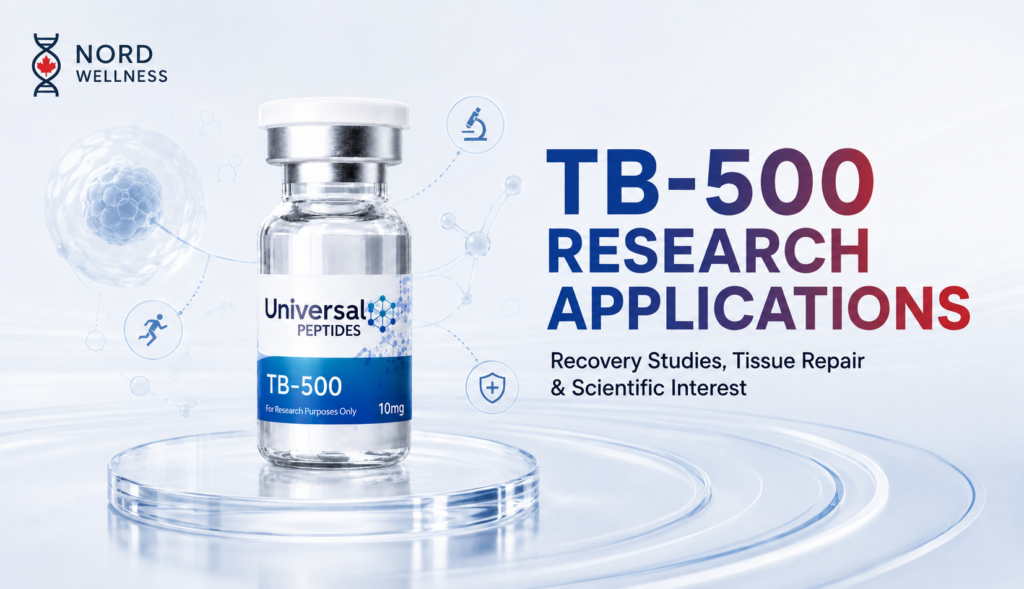
Aug
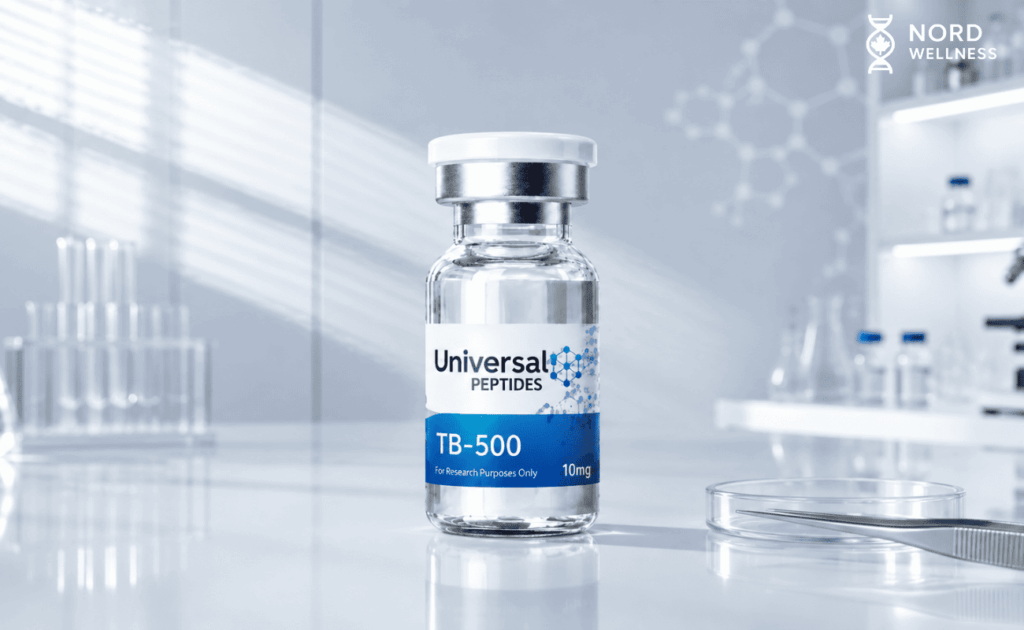
TB-500 is a synthetic peptide fragment associated with thymosin beta-4 (Tβ4), a naturally occurring peptide involved in cellular migration, tissue remodeling, and regenerative processes. Due to its connection with these biological mechanisms, TB-500 has become a topic of interest in preclinical research exploring tissue repair, recovery pathways, angiogenesis, and cellular communication.
Researchers study TB-500 to better understand how peptide signaling may influence biological responses following injury or cellular stress. Current investigations have focused on areas such as muscle recovery, connective tissue biology, wound healing, vascular development, and regenerative mechanisms.
Although TB-500 research continues to expand, most available evidence comes from laboratory and animal studies. Further investigation is required to better understand its biological mechanisms, long-term effects, and potential applications.
Overview of TB-500 Research
TB-500 research is primarily focused on understanding its relationship with thymosin beta-4 pathways and how these pathways influence cellular behavior.
Thymosin beta-4 plays an important role in several biological processes, particularly those involving actin regulation, cell movement, and tissue organization. Because cellular migration and structural remodeling are essential components of regeneration, researchers investigate TB-500 as a tool for studying these mechanisms.
| Research Area | Scientific Focus |
|---|---|
| Cellular migration | Understanding how cells move during repair processes |
| Tissue remodeling | Studying structural changes during regeneration |
| Angiogenesis | Investigating blood vessel formation pathways |
| Cellular signaling | Exploring communication between cells during recovery |
| Regenerative biology | Examining mechanisms involved in tissue maintenance |
Current TB-500 studies aim to provide insight into how peptide-based signaling systems interact with natural repair processes.
Explore TB-500 Peptide for research purposes at TB-500 Peptide
Recovery Research Applications
One of the primary areas of interest surrounding TB-500 is recovery-related research. Scientists investigate how TB-500-associated pathways may contribute to understanding biological responses after tissue stress or injury.
Cellular Recovery Studies
Cellular recovery involves multiple processes, including migration, communication, structural organization, and adaptation to stress.
TB-500 research explores its potential relationship with:
- Cellular movement toward affected areas
- Tissue remodeling responses
- Repair-associated signaling pathways
- Cellular adaptation mechanisms
These studies help researchers understand how cells coordinate complex recovery processes.
Angiogenesis and Tissue Support Research
Angiogenesis, the formation of new blood vessels, is an important part of tissue regeneration. Developing tissues require vascular support to maintain oxygen and nutrient delivery.
Research involving TB-500-related mechanisms examines:
| Biological Process | Research Importance |
|---|---|
| Endothelial activity | Understanding vascular cell responses |
| Blood vessel formation | Studying tissue support mechanisms |
| Vascular signaling | Exploring regeneration-related pathways |
These investigations contribute to broader research into how vascular systems support tissue recovery.
Wound Healing Research
Wound healing requires coordinated activity between different biological systems, including immune responses, cellular migration, vascular development, and tissue remodeling.
TB-500-related studies investigate:
- Cellular movement during repair
- Structural tissue organization
- Regeneration-related signaling
These research models help scientists understand how peptide pathways may influence natural healing processes.
Musculoskeletal Research
TB-500 has received significant scientific attention in musculoskeletal research due to its association with tissue remodeling and cellular migration pathways.
Muscle Research
Skeletal muscle repair involves complex interactions between cells, structural proteins, and signaling molecules.
Researchers study TB-500-related pathways to better understand:
| Research Area | Scientific Investigation |
|---|---|
| Muscle regeneration | Cellular repair and adaptation mechanisms |
| Tissue remodeling | Structural recovery processes |
| Cellular signaling | Communication during recovery |
These studies provide insights into how peptide signaling may influence muscle biology.
Tendon and Ligament Research
Tendons and ligaments are connective tissues that rely on organized extracellular structures for proper function. Their repair processes involve collagen organization, cellular activity, and tissue remodeling.
TB-500 research explores mechanisms related to:
- Connective tissue organization
- Fibroblast activity
- Extracellular matrix remodeling
- Structural recovery pathways
Understanding these processes may help researchers better evaluate how peptides interact with connective tissue biology.
Soft Tissue Research
Beyond muscle and connective tissues, TB-500-related pathways are also studied in broader soft tissue models.
Researchers examine how peptide signaling may influence:
- Cellular movement
- Tissue structure maintenance
- Recovery responses after biological stress
These studies contribute to a broader understanding of regenerative mechanisms.
Explore TB-500 Peptide for research purposes at TB-500 Peptide
Emerging Areas of Study
As scientific interest in peptide-based research continues to grow, TB-500 is being investigated in several emerging areas.
Cellular Communication Research
Cells communicate through complex networks of molecular signals. Researchers study TB-500-related pathways to understand how peptide signaling may influence:
- Cell-to-cell communication
- Tissue coordination
- Repair-related responses
This area provides insight into how biological systems organize recovery processes.
Regenerative Biology Research
Regenerative biology focuses on understanding how tissues maintain, repair, and restore their structure.
TB-500 research contributes to studies involving:
| Research Field | Scientific Interest |
|---|---|
| Tissue engineering | Understanding repair mechanisms |
| Cellular biology | Studying migration and organization |
| Vascular biology | Exploring blood vessel development |
| Recovery science | Investigating biological adaptation |
These areas continue to develop as researchers explore peptide interactions with regenerative pathways.
Stress Response and Cellular Resilience
Cells often experience stress caused by injury, inflammation, or environmental changes.
Researchers investigate TB-500-related mechanisms to better understand:
- Cellular adaptation
- Stress response pathways
- Maintenance of cellular function
These studies contribute to broader research into how cells respond under challenging conditions.
Future Research Directions
Future TB-500 research may focus on expanding the understanding of its molecular mechanisms and biological effects. In particular, further studies may help clarify its role in cellular signaling, tissue remodeling, and regenerative pathways across different experimental models.
Important areas for future investigation include:
| Research Direction | Scientific Goal |
|---|---|
| Human studies | Understanding biological responses in human systems |
| Molecular mechanisms | Identifying specific signaling pathways |
| Long-term research | Evaluating extended biological effects |
| Standardized protocols | Improving consistency between studies |
While current findings provide valuable insights, additional research is necessary to determine how TB-500-related mechanisms may translate into broader scientific applications.
For a deeper understanding of TB-500, including its mechanism of action, recovery research, tissue repair pathways, and scientific applications, read the full article: TB-500 Peptide: Benefits, Mechanism, Recovery Research, and Scientific Applications
FAQ About TB-500 Research Applications
What is TB-500 used for in research?
TB-500 is studied as a research peptide for understanding cellular migration, tissue remodeling, angiogenesis, and regenerative pathways. In particular, these areas of investigation help researchers explore how peptide signaling may influence cellular organization, tissue adaptation, and repair-related biological processes.
What areas of research involve TB-500?
TB-500 research includes tissue repair studies, muscle biology, connective tissue research, wound healing models, vascular studies, and cellular signaling investigations. In particular, these areas allow researchers to explore how peptide-related pathways may influence cellular behavior, tissue remodeling, and regenerative mechanisms in controlled experimental settings.
How does TB-500 relate to recovery research?
TB-500 is investigated for its association with cellular movement, tissue remodeling, and biological processes involved in recovery responses. In particular, these studies help researchers explore how peptide-related pathways may influence cellular adaptation, structural organization, and regenerative mechanisms.
Is TB-500 clinically approved?
Currently, TB-500 remains primarily a research peptide. Human clinical evidence is limited, and further studies are required to understand its biological effects.
What are the limitations of TB-500 research?
Most available evidence comes from preclinical studies. In particular, additional research is needed to better understand long-term effects, human responses, and potential applications of TB-500 in different biological contexts.
Final Thoughts
TB-500 research continues to provide valuable insights into the relationship between peptide signaling, cellular migration, tissue remodeling, and regenerative biology. By studying TB-500-related pathways, researchers can better understand how biological systems coordinate recovery and maintain tissue function.
Although current studies have identified important mechanisms associated with thymosin beta-4 pathways, most evidence remains in the preclinical stage. Continued scientific investigation will help clarify TB-500’s mechanisms, applications, and role in future peptide research.
Disclaimer
This content is provided by Nord Wellness for educational and research purposes only. TB-500 Peptide is not approved for the diagnosis, treatment, cure, or prevention of any disease.


This was a really useful overview of the research applications surrounding TB-500. I liked how the article connected cell migration, angiogenesis, and tissue repair to the broader mechanisms being investigated with thymosin-related peptides. The research-focused approach also makes it easier to distinguish areas of scientific interest from established clinical evidence.
Great article overall. The discussion of vascular research and cellular migration was particularly interesting, especially given the existing literature on thymosin beta-4 and angiogenesis. I’d be curious to see more detail on which findings can be directly attributed to TB-500 itself versus research involving thymosin beta-4, since that distinction seems important when evaluating the evidence.
Really enjoyed reading this article. The overview of tissue repair, vascular signalling, and cellular behaviour gives a good picture of why TB-500 continues to attract research interest. One topic I’d love to see explored further is how TB-500 compares with BPC-157 in experimental models, particularly in terms of their proposed mechanisms and the quality of the available evidence.