

Cognitive & Sleep Support, Peptides, Selank
Selank Peptide Cognitive Support: Research on Focus, Memory, and Mental Performance
Summarize the article with:
 ChatGPT
 Claude
 Perplexity
 Google AI
Jun
The search for compounds that may support cognitive function has become a major area of interest in neuroscience and peptide research. Among the peptides frequently discussed in cognitive research circles is Selank, a synthetic heptapeptide originally developed from the naturally occurring immune peptide tuftsin.
Unlike stimulants that primarily increase alertness through direct activation of neurotransmitter pathways, Selank is being investigated for its ability to modulate multiple neurochemical systems simultaneously. Researchers have explored its potential influence on attention, memory formation, stress adaptation, and overall cognitive performance.
Because cognitive function is influenced by a complex interaction of neurotransmitters, neural networks, and stress-response systems, Selank has attracted interest as a research tool for studying how peptide-based compounds may support mental performance under various conditions.
At Nord Wellness, we provide high-quality research peptides intended exclusively for laboratory and scientific investigation. This article examines the current scientific understanding of Selank peptide cognitive support and the evidence behind its potential effects on focus, memory, and cognitive performance.
Why Researchers Study Selank for Cognitive Support
One of the primary reasons researchers investigate Selank is its broad influence on neurotransmitter systems associated with cognition and emotional regulation.
Cognitive performance depends on several interconnected factors, including:
- Attention and concentration
- Working memory
- Information processing speed
- Stress resilience
- Learning efficiency
- Neural communication
Research suggests Selank may influence multiple biological systems that contribute to these processes.
A Multi-System Approach
Many compounds studied for cognition primarily target one neurotransmitter pathway. Selank appears different because it may influence:
- GABA signaling
- Serotonin activity
- Dopamine pathways
- Norepinephrine regulation
- Neuroimmune communication
This broader mechanism has generated interest among researchers studying cognitive performance under both normal and stressful conditions.
Cognitive Performance and Stress
Stress is one of the most significant factors affecting mental performance.
Elevated stress levels can impair:
- Memory formation
- Concentration
- Decision-making
- Learning capacity
Researchers believe some of Selank’s cognitive effects may result from its ability to influence stress-response pathways while simultaneously affecting neurotransmitter balance.
Neuroplasticity Interest
Scientists also investigate whether Selank influences biological processes related to neuroplasticity.
Neuroplasticity refers to the brain’s ability to:
- Form new neural connections
- Adapt to environmental demands
- Strengthen learning pathways
- Improve memory consolidation
Although research remains ongoing, these mechanisms continue to be explored in experimental models.
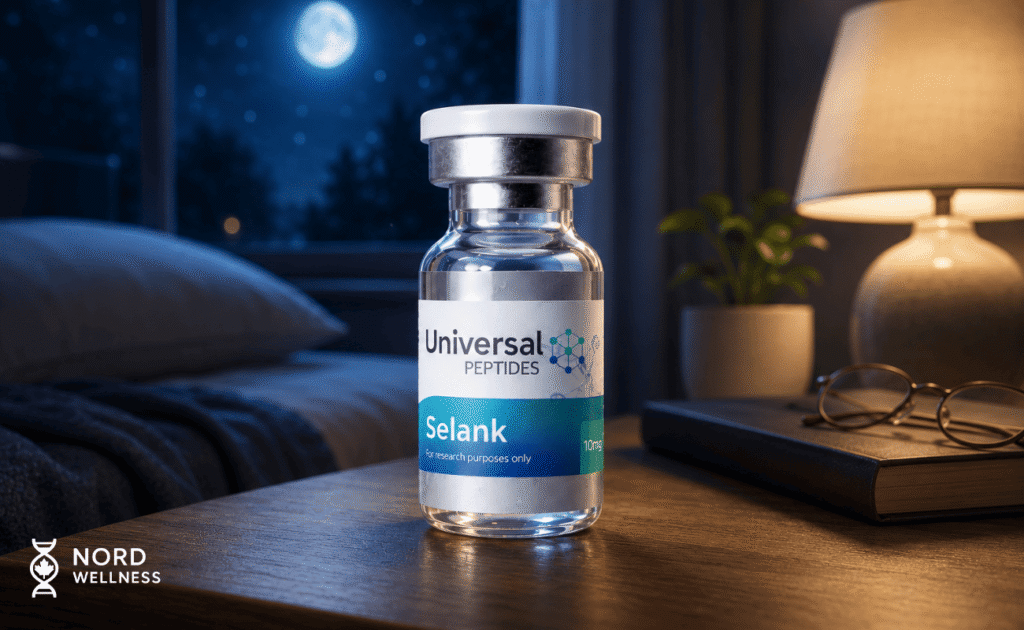
? Explore Selank Peptide for research purposes at Selank Peptide
Potential Effects on Focus and Attention
Attention is one of the most commonly studied aspects of cognitive performance.
Researchers have investigated whether Selank may influence the neural systems responsible for maintaining focus and processing information efficiently.
Modulation of Attention Networks
Focus requires coordinated activity between several neurotransmitter systems.
Studies suggest Selank may influence pathways involving:
- Dopamine
- Norepinephrine
- GABA
- Serotonin
These neurotransmitters help regulate alertness, concentration, and task engagement.
Rather than producing stimulation, Selank may support balanced neural communication, which could potentially contribute to sustained attention in research settings.
Cognitive Performance Under Pressure
Experimental models have shown that cognitive performance often declines during periods of stress.
Researchers continue studying whether Selank may help maintain:
- Task accuracy
- Information processing
- Concentration
- Cognitive flexibility
under challenging conditions.
Mental Clarity Research
Some investigations suggest Selank may influence neural efficiency and information processing pathways.
Although additional research is required, scientists remain interested in understanding whether these mechanisms contribute to improved cognitive performance.
Selank and Memory-Related Research
Memory formation involves a complex sequence of biological events that depend on healthy neurotransmitter signaling and neural communication.
Several studies have examined Selank’s potential role in memory-related processes.
Learning and Memory Acquisition
Researchers have investigated whether Selank influences:
- Learning speed
- Information acquisition
- Memory encoding
- Retention of newly learned information
Experimental findings have suggested possible improvements in learning-related outcomes, although results vary between studies.
Memory Consolidation
Memory consolidation refers to the process by which short-term information becomes stabilized into long-term memory.
Scientists continue exploring whether Selank affects pathways involved in:
- Synaptic communication
- Neural adaptation
- Long-term information storage
- Cognitive integration
These mechanisms remain active areas of investigation.
Working Memory Performance
Working memory is essential for:
- Problem solving
- Decision making
- Attention control
- Information manipulation
Researchers are evaluating whether Selank may influence working memory through its effects on neurotransmitter balance and neural signaling.
Potential Neuroplasticity Mechanisms
Some researchers hypothesize that Selank may indirectly support memory-related processes through effects on neuroplasticity.
Potential areas of interest include:
- Synaptic efficiency
- Adaptive neural responses
- Learning-related signaling pathways
- Neural connectivity
Further studies are needed to confirm these relationships.
Comparing Selank With Other Cognitive Peptides
Selank is often discussed alongside other peptides that are studied for cognitive and neurological applications.
Selank vs Semax
Semax and Selank are among the most widely researched neuroactive peptides.
Selank research commonly focuses on:
- Stress adaptation
- Emotional regulation
- Neurotransmitter balance
- Cognitive resilience
Semax research often emphasizes:
- Attention
- Learning
- Neurotrophic activity
- Cognitive enhancement
Because their mechanisms differ, researchers frequently compare the two compounds in neuroscience studies.
Selank vs Dihexa
Dihexa is primarily investigated for:
- Synaptic growth
- Neuroplasticity
- Neural connectivity
Selank, in contrast, is more frequently studied for:
- Neurotransmitter modulation
- Stress-related cognition
- Emotional and cognitive interactions
Selank vs Noopept
Although Noopept is not a peptide in the same category, comparisons are common within cognitive research discussions.
Researchers generally investigate:
Selank for:
- Neurochemical balance
- Stress resilience
- Cognitive support pathways
Noopept for:
- Learning
- Memory enhancement
- Neuroprotective mechanisms
Unique Characteristics of Selank
What makes Selank particularly interesting is its combination of:
- Cognitive research potential
- Neurotransmitter modulation
- Stress-response regulation
- Neuroimmune activity
Few compounds studied in neuroscience demonstrate this broad profile.
? Explore Selank Peptide for research purposes at Selank Peptide

Current Evidence and Research Limitations
Although Selank has generated considerable scientific interest, researchers must interpret findings carefully.
Promising but Developing Evidence
Many studies have reported observations involving:
- Improved attention
- Enhanced learning performance
- Better stress adaptation
- Memory-related benefits
However, the overall body of evidence remains relatively limited compared with established pharmaceutical compounds.
Differences Between Study Designs
Research findings can vary due to:
- Experimental methods
- Dosing protocols
- Study populations
- Outcome measurements
These factors make direct comparisons difficult.
Mechanisms Are Still Being Investigated
While researchers understand several aspects of Selank’s activity, many questions remain unanswered.
Areas requiring additional investigation include:
- Long-term effects
- Precise receptor interactions
- Gene expression changes
- Neuroplasticity mechanisms
- Neuroimmune contributions
New to Selank research? Explore our complete guide: Selank Peptide: Benefits, Mechanism, Research Applications, and Scientific Insights.
FAQ About Selank Peptide Cognitive Support
Why do researchers study Selank for cognitive support?
Researchers investigate Selank because it may influence neurotransmitter systems involved in attention, memory, learning, and stress adaptation.
Can Selank affect focus and attention?
Research suggests Selank may influence pathways associated with concentration, alertness, and information processing, although further studies are needed.
Does Selank improve memory?
Experimental studies have explored Selank’s effects on learning, memory acquisition, and memory consolidation. Results remain under active investigation.
How is Selank different from stimulants?
Unlike traditional stimulants, Selank appears to act through modulation of multiple neurotransmitter systems rather than directly increasing neural activation.
What neurotransmitters are involved in Selank research?
Researchers commonly study Selank’s interactions with GABA, serotonin, dopamine, and norepinephrine pathways.
Is Selank considered a nootropic peptide?
Yes. Selank is frequently categorized as a nootropic research peptide because of its potential influence on cognition, learning, memory, and mental performance.
Final Thoughts
Selank peptide has become an important subject of cognitive neuroscience research because of its unique ability to influence multiple systems involved in mental performance. Through its interactions with neurotransmitters, stress-response pathways, and potentially neuroimmune mechanisms, Selank offers researchers a valuable model for exploring how peptides may affect focus, memory, and cognitive resilience.
Although current findings are promising, additional studies are necessary to fully understand the biological mechanisms underlying Selank peptide cognitive support. As research advances, scientists may gain deeper insight into how neuroactive peptides contribute to learning, memory, attention, and overall brain function.
For researchers interested in high-quality peptide products for laboratory investigation, explore the research peptide collection available at Nord Wellness.
Disclaimer
This content is provided by Nord Wellness for educational and research purposes only. Selank Peptide is not approved for the diagnosis, treatment, cure, or prevention of any disease.



This was a really informative article on Selank and its potential role in cognitive support research. I appreciated how the article focused on neurotransmitter regulation and neurological signaling rather than making exaggerated claims. The discussion around cognitive performance, stress response, and neuropeptide activity provided a much deeper understanding of the topic.
Great article overall. Many discussions about cognitive-support peptides focus mainly on potential outcomes, but this piece did a great job explaining the biological mechanisms behind Selank. I especially liked the explanation of neurotransmitter modulation and how it may relate to ongoing neurological research.
Really enjoyed reading this article. The explanation of cognitive function, neurochemical balance, and cellular signaling was detailed enough to be educational while remaining easy to follow. It’s refreshing to find research-focused content that presents complex neuroscience topics in such a clear and balanced way.