
GHK-CU, Healing & Regeneration, MOTS-c
GHK-CU Benefits: Skin Health, Hair Research, and Potential Applications
Summarize the article with:
 ChatGPT
 Claude
 Perplexity
 Google AI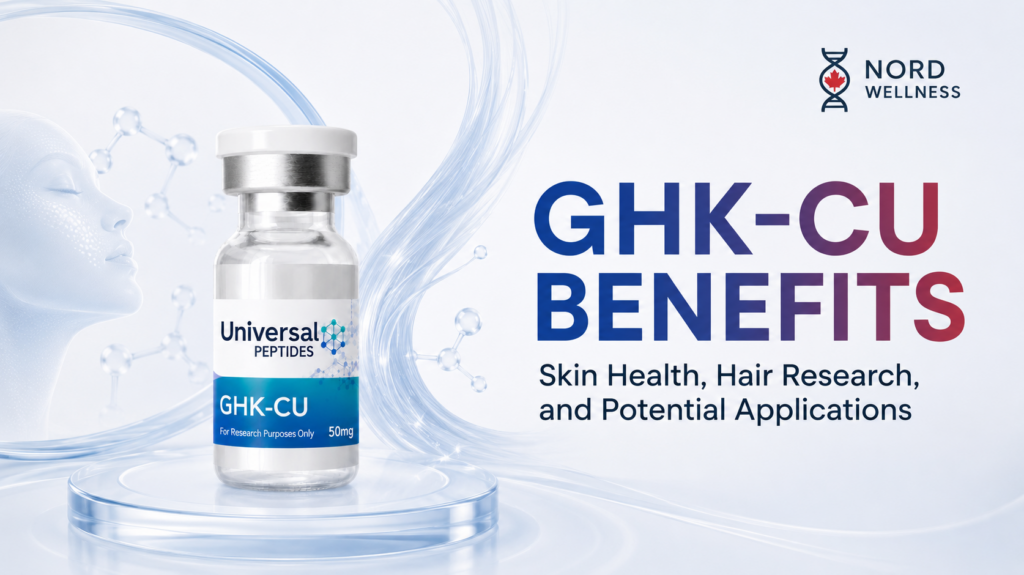
Aug
GHK-CU is a naturally occurring copper-binding tripeptide composed of three amino acids: glycine, histidine, and lysine combined with copper ions. Due to its involvement in copper-dependent biological processes, GHK-Cu has become a widely studied peptide in areas such as skin biology, tissue remodeling, cellular repair, and regenerative research.
Researchers investigate GHK-Cu because copper plays an important role in several biological functions, including collagen-related processes, antioxidant pathways, and extracellular matrix regulation. These mechanisms have made GHK-Cu a subject of interest in research focused on skin structure, hair biology, wound healing, and cellular aging pathways.
While GHK-Cu research has produced promising findings in laboratory and preclinical models, further studies are needed to fully understand its mechanisms, long-term effects, and broader applications.
What Are the Potential Benefits of GHK-CU?
GHK-CU is studied for its potential involvement in several biological pathways related to tissue maintenance, regeneration, and cellular communication.
Rather than targeting a single process, GHK-Cu interacts with multiple copper-dependent mechanisms that researchers investigate across different fields.
| Research Area | Scientific Interest |
|---|---|
| Skin biology | Understanding collagen regulation and extracellular matrix structure |
| Tissue repair | Studying cellular recovery and remodeling pathways |
| Hair research | Investigating follicle-related signaling mechanisms |
| Cellular aging | Exploring changes associated with tissue maintenance |
| Antioxidant pathways | Examining cellular protection mechanisms |
One of the main reasons researchers study GHK-Cu is its relationship with copper availability. In particular, copper is an essential mineral involved in enzymes that regulate structural proteins, antioxidant defense, and cellular metabolism.
Collagen and Extracellular Matrix Research
Collagen is a major structural protein that provides strength and organization to connective tissues. In particular, the production and maintenance of collagen involve complex interactions between cells, enzymes, and signaling molecules. GHK-Cu research explores its potential relationship with:
- Fibroblast activity
- Collagen-related pathways
- Extracellular matrix remodeling
- Tissue structure maintenance
Fibroblasts are specialized cells responsible for producing collagen and other structural components. In particular, understanding how these cells respond to biological signals is an important area of skin and regenerative research, as it provides insights into extracellular matrix organization and tissue maintenance.
Cellular Repair and Regeneration Research
Tissue maintenance requires continuous communication between cells and surrounding structures. In particular, researchers study GHK-Cu in relation to:
| Biological Process | Research Focus |
|---|---|
| Cellular communication | Understanding signaling between cells |
| Tissue remodeling | Studying structural organization changes |
| Cellular migration | Exploring movement during repair processes |
| Stress response | Investigating cellular adaptation mechanisms |
These studies help scientists better understand how copper peptides may influence biological repair pathways. In particular, they provide insights into cellular communication, extracellular matrix regulation, and tissue remodeling mechanisms in experimental models.
Explore GHK-CU Peptide for research purposes at GHK-CU Peptide
GHK-CU and Skin Research
Skin research is one of the most developed areas of GHK-Cu investigation. In particular, scientists study how GHK-Cu may interact with biological mechanisms involved in maintaining skin structure, cellular communication, and tissue function.
Collagen and Skin Structure Studies
The skin relies on collagen, elastin, and extracellular matrix components to maintain its organization. In particular, GHK-Cu research examines its potential effects on:
- Collagen-related signaling
- Fibroblast activity
- Extracellular matrix regulation
- Tissue remodeling processes
Together, these mechanisms represent important areas of interest in cosmetic science and regenerative biology research.
Skin Repair and Wound Healing Research
Wound healing involves several coordinated stages, including inflammation regulation, cellular migration, blood vessel development, and tissue remodeling.
Researchers investigate GHK-Cu-related pathways in relation to:
| Research Stage | Scientific Interest |
|---|---|
| Cellular migration | Understanding movement of repair-related cells |
| Tissue remodeling | Studying structural recovery |
| Angiogenesis | Exploring blood vessel formation pathways |
| Matrix organization | Investigating tissue structure restoration |
These studies provide insight into how copper peptides may participate in natural repair mechanisms.
Antioxidant and Cellular Protection Research
Oxidative stress can influence cellular function by affecting proteins, membranes, and signaling pathways. In particular, GHK-Cu is studied for its potential relationship with:
- Antioxidant defense systems
- Cellular stress responses
- Protection mechanisms within tissues
Understanding these pathways helps researchers explore how cells maintain function, adapt to environmental challenges, and regulate biological responses under stressful conditions. In particular, these insights contribute to broader research on cellular resilience, stress-response mechanisms, and tissue maintenance processes.
GHK-CU and Hair Growth Research
GHK-CU has also gained scientific interest in hair biology research due to its potential relationship with cellular signaling and tissue environments surrounding hair follicles.
Hair growth is a complex process involving interactions between:
- Hair follicle cells
- Surrounding connective tissue
- Growth-related signaling molecules
- Local biological conditions
Researchers investigate GHK-Cu to better understand how copper peptide pathways may influence these processes. In particular, these studies help clarify the relationship between copper regulation, cellular signaling, and biological mechanisms involved in tissue maintenance and repair.
Hair Follicle Research
Studies explore the relationship between GHK-Cu and:
| Research Area | Scientific Focus |
|---|---|
| Hair follicle biology | Understanding follicle-related cellular activity |
| Cellular signaling | Studying communication pathways |
| Tissue environment | Examining surrounding support structures |
| Regenerative pathways | Investigating repair-related mechanisms |
These investigations contribute to broader research into how peptides interact with biological systems involved in hair maintenance. In particular, they help researchers understand cellular signaling, follicle biology, and the molecular pathways that support tissue organization and function.
Scalp and Tissue Biology Research
The environment surrounding hair follicles plays an important role in follicle function. In particular, researchers study GHK-Cu-related mechanisms involving:
- Local tissue signaling
- Extracellular matrix organization
- Cellular communication
However, more research is required to fully understand how these mechanisms translate into human hair-related outcomes.
Explore GHK-CU Peptide for research purposes at GHK-CU Peptide
Current Scientific Findings
Current scientific findings suggest that GHK-Cu is involved in several biological processes related to tissue maintenance and regeneration. In particular, research has explored its relationship with cellular communication, extracellular matrix regulation, and pathways associated with tissue structure and repair.
Research areas include:
| Scientific Field | Current Research Focus |
|---|---|
| Skin biology | Collagen pathways and extracellular matrix regulation |
| Regenerative research | Cellular repair mechanisms |
| Hair biology | Follicle signaling pathways |
| Cellular aging | Tissue maintenance and stress responses |
Although laboratory studies have shown biological activity associated with GHK-Cu, important limitations remain.
Research Limitations
Most GHK-Cu studies are conducted through:
- Laboratory experiments
- Cell-based research models
- Preclinical studies
Key limitations include:
| Limitation | Explanation |
|---|---|
| Limited human studies | More clinical research is needed |
| Complex biological pathways | Multiple mechanisms influence outcomes |
| Different research models | Results may vary between experimental systems |
| Long-term effects | Additional investigation is required |
These factors highlight the importance of interpreting GHK-Cu research within the context of current scientific evidence. In particular, researchers should consider study design, available data, and existing limitations when evaluating its biological mechanisms and potential applications.
For a deeper understanding of GHK-Cu benefits, mechanisms, skin research, and scientific applications, read: GHK-Cu Peptide: Benefits, Mechanism, Skin Research, and Scientific Applications
FAQ About GHK-CU Benefits
What is GHK-Cu peptide?
GHK-Cu is a copper-binding tripeptide made of glycine, histidine, and lysine. In particular, it is studied for its role in skin biology, tissue repair, and cellular signaling research, including mechanisms related to copper regulation and biological communication pathways.
What are the potential benefits of GHK-Cu research?
GHK-Cu research focuses on collagen regulation, tissue remodeling, cellular protection, skin biology, and hair-related biological pathways. In particular, these areas of investigation help researchers understand how copper peptide signaling may interact with cellular processes involved in tissue structure, maintenance, and regeneration.
How does GHK-Cu work?
GHK-Cu works by binding copper and interacting with copper-dependent biological pathways involved in collagen processes, antioxidant activity, and cellular communication. In particular, these interactions are studied to understand how copper peptide signaling may influence tissue maintenance, extracellular matrix regulation, and cellular responses.
Why is GHK-Cu studied for skin research?
Researchers study GHK-Cu because of its relationship with fibroblast activity, extracellular matrix regulation, and tissue remodeling pathways.
Is GHK-Cu approved for medical use?
GHK-Cu is primarily studied in research and cosmetic science settings. In particular, additional clinical studies are needed to further understand its biological effects, mechanisms of action, and potential applications.
Final Thoughts
GHK-Cu continues to be an important research peptide due to its connection with copper signaling, collagen pathways, tissue remodeling, and cellular repair mechanisms. Its role in skin biology and hair research has made it a valuable compound for scientists studying regenerative processes.
Current findings provide insights into how copper peptides may influence cellular communication and tissue maintenance. However, most evidence remains based on experimental research, and further studies are required to better understand GHK-Cu’s long-term effects and potential applications.
Disclaimer
This content is provided by Nord Wellness for educational and research purposes only. GHK-CU Peptide is not approved for the diagnosis, treatment, cure, or prevention of any disease.


I really liked how clearly this article breaks down the potential benefits of GHK-Cu, especially the connection to skin health and collagen production. I’m curious whether the results tend to vary depending on the form of GHK-Cu being used.
I appreciate how this article presents the potential benefits of GHK-Cu without making it sound like a one-size-fits-all solution. There is a lot of information about peptides online, so having the benefits explained in a clear and research-focused way is useful. A comparison with other commonly discussed peptides would make for an interesting follow-up.
Really enjoyed this overview of GHK-Cu and its potential benefits. The article does a good job of explaining the topic in a way that’s easy to follow without making the claims feel exaggerated. I’d be interested in seeing more discussion about which potential benefits currently have the strongest research behind them.
Pingback: GHK-CU Peptide: Benefits, Mechanism, Skin Research, and Scientific Applications - nordwellness.is