Category Archives: Immune & Specialized Peptides

Immune & Specialized Peptides refer to bioactive peptide compounds studied for their potential roles in modulating immune responses, supporting tissue repair, and targeting specific physiological pathways in research settings.

SS-31 Peptide Research Applications: Mitochondrial Health and Scientific Interest
ss-31-peptide-research-applications

SS-31 Peptide, also known as Elamipretide, is a mitochondria-targeted tetrapeptide that has become a prominent focus in cellular bioenergetics and mitochondrial research. Its ability to selectively target mitochondrial membranes, reduce oxidative stress, and enhance ATP production has made it an invaluable tool for studying mitochondrial health, energy metabolism, and cytoprotection. This article explores the research […]
SS-31 Mitochondrial Peptide: Role in Energy Production and Mitochondrial Research

ss-31-mitochondrial-peptide

SS-31 Peptide, also known as Elamipretide, is a mitochondria-targeted tetrapeptide that has gained significant attention in research focused on cellular energy production and mitochondrial function. Its unique ability to selectively accumulate in mitochondria and stabilize mitochondrial membranes makes it a powerful tool for studying bioenergetics, oxidative stress, and cytoprotective mechanisms in various cell types. This […]

SS-31 Peptide Mechanism: Understanding Its Effects on Mitochondrial Function

ss-31-peptide-mechanism

SS-31 Peptide, also known as Elamipretide, is a mitochondria-targeted tetrapeptide that has gained significant attention in research for its ability to improve mitochondrial efficiency and reduce oxidative stress. By selectively interacting with mitochondrial membranes, SS-31 stabilizes electron transport chain complexes, enhances ATP production, and protects cells from reactive oxygen species (ROS)-induced damage. This article provides […]

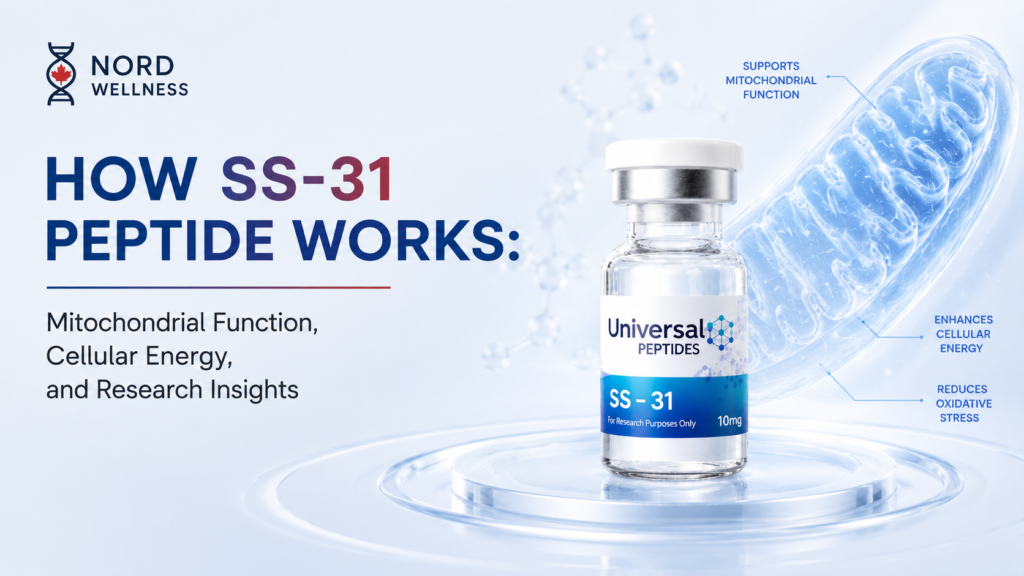
How SS-31 Peptide Works: Mitochondrial Function, Cellular Energy, and Research Insights

how-ss-31-peptide-works

SS-31 Peptide, also known as Elamipretide, is a mitochondria-targeted tetrapeptide that has attracted significant attention in cellular and metabolic research. By interacting selectively with mitochondrial membranes, SS-31 helps preserve mitochondrial integrity, reduce oxidative stress, and enhance ATP production. Understanding how SS-31 works provides researchers with a unique tool for studying cellular bioenergetics, cytoprotection, and the […]

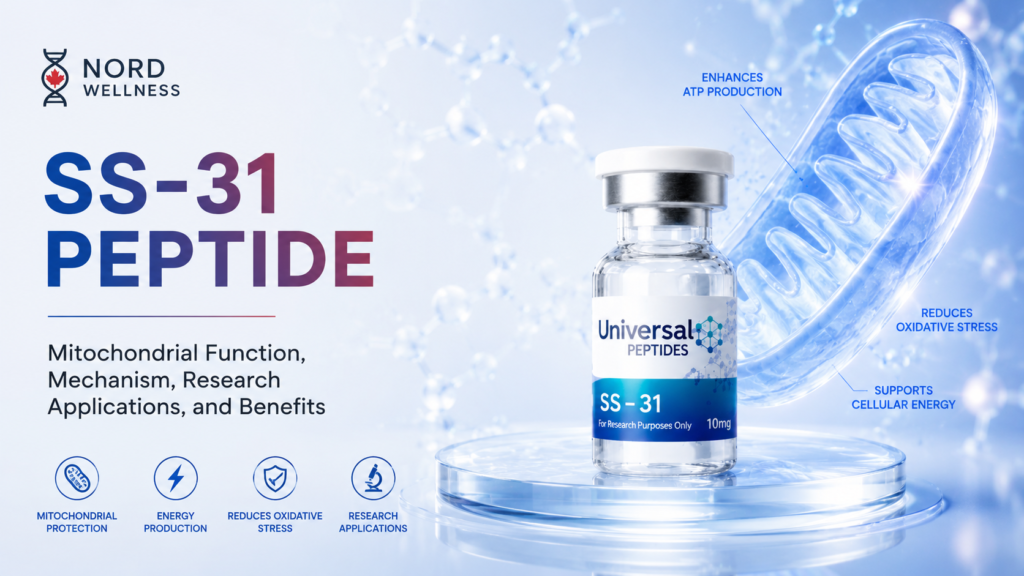
SS-31 Peptide: Mitochondrial Function, Mechanism, Research Applications, and Benefits

ss-31-peptide

SS-31 Peptide, also known as Elamipretide, is a mitochondria-targeted tetrapeptide that has garnered attention in research due to its ability to improve mitochondrial efficiency and reduce oxidative stress. By selectively targeting mitochondrial membranes, SS-31 offers a unique approach to understanding cellular bioenergetics, mitochondrial dysfunction, and related disease processes. In research contexts, SS-31 is not used […]

VIP Nasal Spray: Intranasal Delivery and Research Considerations

vip-nasal-spray

VIP nasal spray refers to an intranasal research formulation of Vasoactive Intestinal Peptide, a 28-amino-acid neuropeptide studied for its role in cellular signaling, vascular regulation, smooth muscle activity, immune communication, and neuroendocrine pathways. In research contexts, intranasal delivery is often discussed because the nasal cavity provides a unique interface between local mucosal tissue, systemic circulation, […]

VIP Mechanism Explained: Receptor Interaction and Signaling Pathways

vip-mechanism

Vasoactive Intestinal Peptide, commonly known as VIP, is a regulatory neuropeptide studied for its ability to influence cellular signaling, smooth muscle activity, vascular tone, immune communication, and multi-system physiological regulation. For researchers, the key question is not only what VIP does, but how VIP mechanism works at the receptor and intracellular signaling level. VIP mainly […]

How VIP Works: Cellular Signaling and Physiological Effects Explained

how-vip-works

Vasoactive Intestinal Peptide, commonly known as VIP, is a regulatory neuropeptide studied for its wide influence on cellular communication, smooth muscle activity, vascular regulation, immune signaling, and nervous system function. Although VIP was first associated with intestinal activity, research has shown that it plays a much broader role across multiple biological systems. In research peptide […]

VIP Peptide: Function, Mechanism, and Research Applications

vip-peptide-function-mechanism-and-research-applications

Vasoactive Intestinal Peptide, commonly known as VIP peptide, is a naturally occurring neuropeptide studied for its role in cellular communication, smooth muscle regulation, immune signaling, and neuroendocrine activity. In research settings, VIP is especially interesting because it connects multiple biological systems, including the nervous system, gastrointestinal tract, respiratory system, cardiovascular regulation, and immune response. For […]

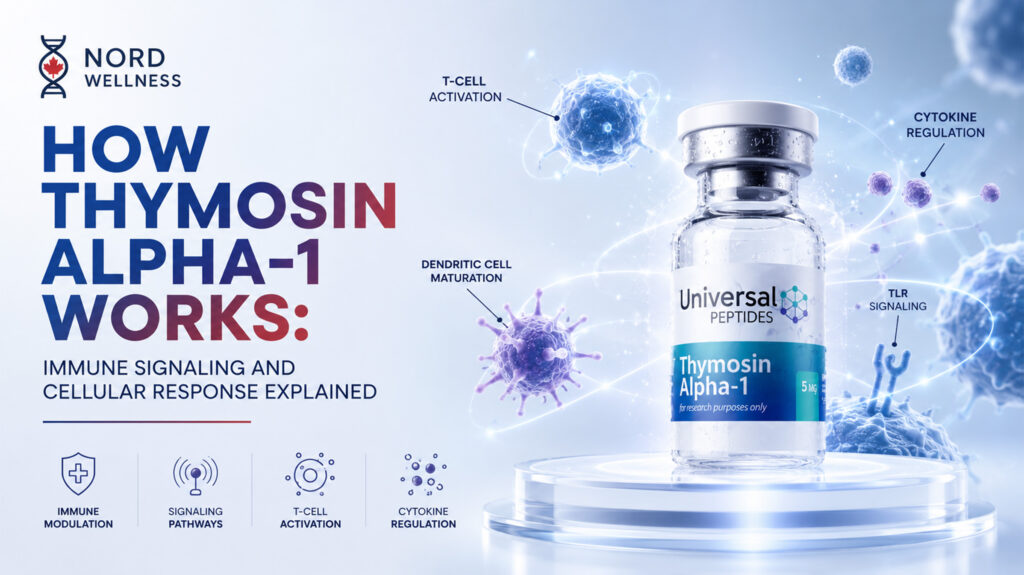
How Thymosin Alpha-1 Works: Immune Signaling and Cellular Response Explained

how-thymosin-alpha-1-works-immune-signaling-and-cellular-response-explained

Understanding how Thymosin Alpha-1 works requires looking at its role in immune signaling, cellular communication, and peptide-based response regulation. Thymosin Alpha-1, often abbreviated as TA-1 or Tα1, is a 28-amino-acid thymic peptide commonly studied in immune-related research models. Unlike peptides that are mainly investigated for metabolic signaling, tissue repair pathways, or hormonal regulation, Thymosin Alpha-1 […]