

Cognitive & Sleep Support, Peptides, Selank
Selank Peptide: Benefits, Mechanism, Research Applications, and Scientific Insights
Summarize the article with:
 ChatGPT
 Claude
 Perplexity
 Google AI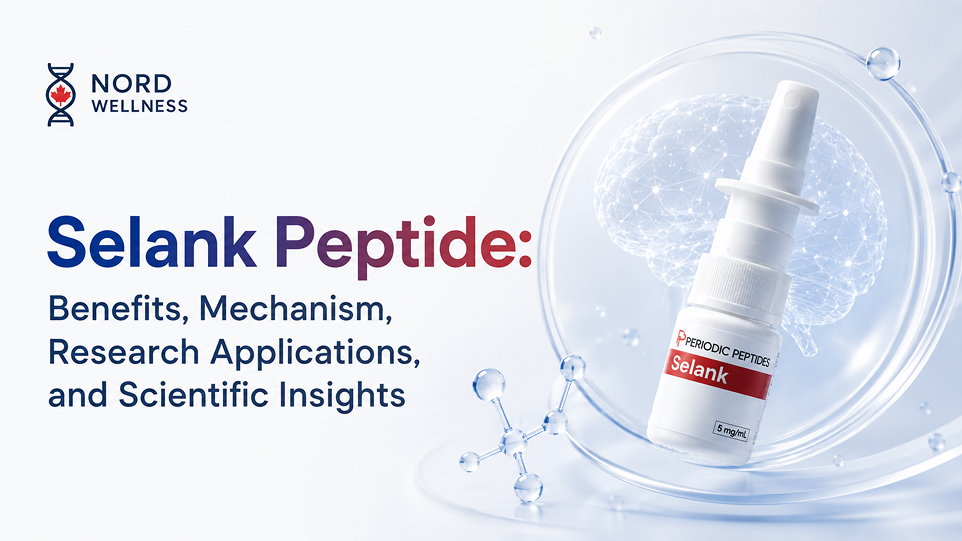
Jun
Selank Peptide has attracted growing interest in neuroscience and peptide research because of its potential influence on anxiety-related pathways, cognitive function, and immune regulation. Originally developed in Russia as a synthetic analog of a naturally occurring immunomodulatory peptide, Selank has been studied for its effects on neurotransmitter systems and behavioral responses in various experimental models.
Unlike traditional compounds that primarily target a single receptor or pathway, Selank appears to interact with multiple neurochemical systems simultaneously. This unique profile has made it an important subject of research in areas such as stress response, memory formation, learning processes, and neuroimmune communication.
Researchers continue to investigate Selank peptide to better understand its mechanisms of action and its potential applications within controlled laboratory settings. While findings remain promising, much of the available evidence comes from preclinical and early-stage clinical research.
At Nord Wellness, we provide research peptides intended exclusively for laboratory and scientific investigation. Explore our collection of high-quality research compounds to support your ongoing studies.
What Is Selank Peptide?
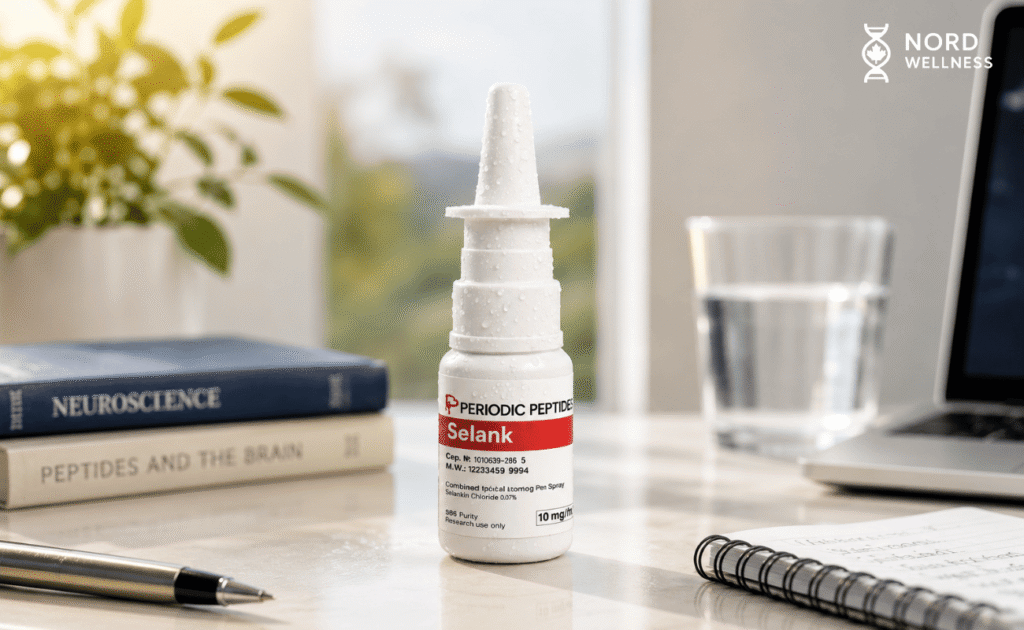
Selank is a synthetic heptapeptide derived from tuftsin, a naturally occurring peptide involved in immune system regulation. Scientists developed Selank to enhance the biological stability and activity of tuftsin while preserving its beneficial properties.
The peptide consists of seven amino acids and has been studied extensively for its effects on:
- Anxiety-related behaviors
- Cognitive performance
- Learning and memory
- Neurotransmitter regulation
- Immune system signaling
One of the distinguishing characteristics of Selank peptide is its apparent ability to influence both the nervous system and immune system, suggesting a role in neuroimmune communication.
Because of these properties, Selank has become a valuable research tool for studying how peptides may affect emotional regulation, cognition, and stress adaptation.
? Explore Selank Peptide for research purposes at Selank Peptide

How Selank Peptide Works
The exact mechanism of Selank remains under investigation, but current research suggests that the peptide influences several interconnected biological pathways.
Modulation of GABAergic Activity
One of the most studied mechanisms involves the gamma-aminobutyric acid (GABA) system.
GABA is the primary inhibitory neurotransmitter in the central nervous system and plays a major role in regulating:
- Anxiety
- Stress responses
- Emotional stability
- Neural excitability
Research suggests that Selank may indirectly enhance GABAergic signaling, potentially contributing to observed anxiolytic effects without producing significant sedation.
Influence on Monoamine Neurotransmitters
Studies have reported changes in the activity of neurotransmitters including:
- Serotonin
- Dopamine
- Norepinephrine
These neurotransmitters are heavily involved in:
- Mood regulation
- Motivation
- Reward processing
- Attention
- Cognitive flexibility
Through modulation of these systems, Selank may influence behavioral and cognitive outcomes in research models.
Effects on Neuroplasticity
Neuroplasticity refers to the brain’s ability to adapt and reorganize neural connections.
Experimental findings suggest Selank may influence processes associated with:
- Synaptic communication
- Learning
- Memory consolidation
- Cognitive adaptation
Although mechanisms remain under study, researchers continue exploring how Selank may affect neuronal signaling networks.
Neuroimmune Interactions
Selank’s origins as a tuftsin-derived peptide have led scientists to investigate its immunomodulatory properties.
Research suggests potential effects on:
- Cytokine regulation
- Immune signaling pathways
- Neuroinflammatory processes
These observations have increased interest in Selank as a model compound for studying interactions between the immune and nervous systems.
Potential Benefits of Selank Peptide
Research has identified several areas where Selank may produce measurable biological effects.
Anxiety and Stress Response Research
One of the most frequently studied applications involves anxiety-related behavior.
Experimental models have reported:
- Reduced anxiety-like behaviors
- Improved stress resilience
- Stabilization of emotional responses
Unlike some conventional anxiolytic compounds, Selank has been investigated for producing these effects without significant impairment of cognitive function.
Cognitive Function and Memory
Researchers have explored Selank’s influence on cognitive performance in both animal and human studies.
Potential observations include:
- Enhanced memory retention
- Improved learning efficiency
- Increased attention
- Better information processing
These findings have generated interest in Selank as a cognitive research peptide.
Mental Performance Under Stress
Stress can negatively impact memory, concentration, and decision-making.
Studies suggest Selank may help maintain cognitive performance during stressful conditions by modulating stress-related neurochemical pathways.
Immune System Regulation
Because Selank originated from an immunologically active peptide, researchers continue investigating its effects on:
- Immune balance
- Cytokine expression
- Inflammatory signaling
This area remains active within neuroimmunology research.
Neuroprotective Research Interest
Emerging studies suggest Selank may influence pathways associated with neuronal protection and adaptive responses to cellular stress.
Researchers are exploring whether these mechanisms could contribute to long-term neural resilience in experimental models.
? Explore Selank Peptide for research purposes at Selank Peptide
Common Areas of Selank Research
Selank has become a subject of investigation across several scientific disciplines.
Anxiety and Behavioral Neuroscience
Researchers use Selank to study:
- Anxiety-related behaviors
- Stress adaptation
- Emotional regulation
- Fear responses
Learning and Memory Studies
Experimental applications often examine:
- Memory acquisition
- Recall performance
- Cognitive flexibility
- Information retention
Neurotransmitter Research
Selank provides a useful model for studying interactions between:
- GABA systems
- Serotonin pathways
- Dopaminergic signaling
- Noradrenergic activity
Neuroimmune Communication
Scientists are increasingly interested in understanding how immune molecules influence brain function.
Selank serves as a valuable research compound for investigating these complex interactions.
Cognitive Enhancement Research
Researchers continue evaluating whether peptide-based interventions can influence:
- Focus
- Attention
- Executive function
- Mental adaptability
Selank remains one of the more extensively studied candidates in this field.
Selank Compared With Other Nootropic Peptides
Several research peptides are investigated for their effects on cognition and neurological function.
Selank vs Semax
Semax and Selank are frequently studied together because both were developed in Russia and target cognitive pathways.
Selank research focuses primarily on:
- Anxiety regulation
- Stress adaptation
- Neuroimmune effects
Semax research often emphasizes:
- Cognitive enhancement
- Attention
- Neurotrophic signaling
- Learning performance
Researchers sometimes compare these compounds to evaluate differences in neurotransmitter modulation and behavioral outcomes.
Selank vs Dihexa
Dihexa is investigated primarily for neuroplasticity and synaptic growth.
Compared with Dihexa, Selank is more commonly studied for:
- Emotional regulation
- Anxiety-related pathways
- Neurochemical balance
Selank vs Noopept
Although Noopept is not technically a peptide in the same category, it is frequently included in cognitive research discussions.
Selank research places greater emphasis on:
- Stress response
- GABA modulation
- Neuroimmune activity
while Noopept research often centers on cognitive performance and memory mechanisms.
? Explore Selank Peptide for research purposes at Selank Peptide
Safety and Research Considerations
Current evidence suggests Selank has demonstrated a favorable safety profile within research settings.
However, several important considerations remain.
Limited Long-Term Data
Although numerous studies have investigated Selank, large-scale long-term research remains limited.
Questions remain regarding:
- Chronic exposure
- Long-term neurochemical adaptations
- Extended physiological effects
Variability Between Studies
Differences in:
- Study design
- Dosing protocols
- Experimental models
- Outcome measurements
can make direct comparisons challenging.
Research-Only Status
Selank should be viewed as an investigational research compound.
Researchers should ensure:
- Proper storage procedures
- Accurate dosing protocols
- Appropriate experimental controls
- Compliance with applicable regulations
Need for Further Investigation
Despite encouraging findings, additional research is needed to clarify:
- Mechanisms of action
- Optimal research protocols
- Long-term biological effects
- Potential applications across scientific disciplines
? SEE MORE:
- How Selank Peptide Works: Mechanisms, Neurotransmitters, and Research Insights
- Selank Peptide Mechanism: Understanding Its Effects on Brain Function and Neurochemical Activity
- Selank Peptide Cognitive Support: Research on Focus, Memory, and Mental Performance
- Selank Peptide vs Semax: Differences, Benefits, Mechanisms, and Research Applications
FAQ About Selank Peptide
What is Selank peptide?
Selank is a synthetic heptapeptide derived from tuftsin that is studied for its effects on anxiety-related pathways, cognition, neurotransmitter activity, and neuroimmune regulation.
How does Selank work?
Research suggests Selank may modulate GABAergic activity, influence serotonin and dopamine signaling, affect neuroplasticity, and interact with immune-related pathways.
Why is Selank considered a nootropic peptide?
Researchers investigate Selank for its potential effects on learning, memory, attention, and cognitive performance, particularly under stressful conditions.
What makes Selank different from Semax?
Selank research primarily focuses on anxiety regulation and neuroimmune communication, whereas Semax research more commonly emphasizes cognitive enhancement and neurotrophic activity.
Is Selank approved for general use?
Regulatory status varies by jurisdiction. In many regions, Selank remains primarily a research compound and is studied within laboratory and scientific settings.
What are the main areas of Selank research?
Current research focuses on anxiety, stress resilience, memory, learning, neurotransmitter modulation, cognitive performance, and neuroimmune interactions.
Final Thoughts
Selank Peptide represents one of the more intriguing compounds in modern neuroscience and peptide research. Its ability to influence neurotransmitter systems, stress responses, cognitive processes, and immune signaling has generated significant scientific interest across multiple disciplines.
Although current findings suggest promising biological activity, many questions remain regarding its full mechanisms and long-term effects. Continued research will be essential for understanding how Selank influences the complex relationship between the nervous and immune systems.
For researchers seeking high-quality peptide products to support scientific investigation, Nord Wellness offers a growing selection of research compounds manufactured for laboratory use and educational exploration.
Disclaimer
This content is provided by Nord Wellness for educational and research purposes only. Selank Peptide is not approved for the diagnosis, treatment, cure, or prevention of any disease.



This was a really informative article about Selank and its role in neuropeptide research. I appreciated how the content explained neurotransmitter signaling and stress-response pathways in a way that was detailed without being overwhelming. The discussion around cognitive function and neurological research applications was especially interesting.
Great article overall. Many resources mention Selank but don’t spend much time explaining the underlying biological mechanisms. This article did a great job connecting neurotransmitter modulation, cellular communication, and ongoing research interest into a clear and easy-to-follow overview
Really enjoyed reading this article. The explanation of Selank’s interaction with neurological signaling pathways was balanced, educational, and accessible for readers who are still learning about peptide science. I’d be interested in seeing more content comparing Selank with other cognitive and neuropeptide-focused compounds in research settings.
Pingback: How Selank Peptide Works: Mechanisms, Neurotransmitters, and Research Insights - nordwellness.is
Pingback: Selank Peptide Mechanism: Understanding Its Effects on Brain Function and Neurochemical Activity - nordwellness.is
Pingback: Selank Peptide Cognitive Support: Research on Focus, Memory, and Mental Performance - nordwellness.is
Pingback: Selank Peptide vs Semax: Differences, Benefits, Mechanisms, and Research Applications - nordwellness.is