

MOTS-c, Peptides, Weight Management & Metabolic Health
MOTS-c Peptide Mechanism: Understanding Its Role in Metabolic and Mitochondrial Research
Summarize the article with:
 ChatGPT
 Claude
 Perplexity
 Google AI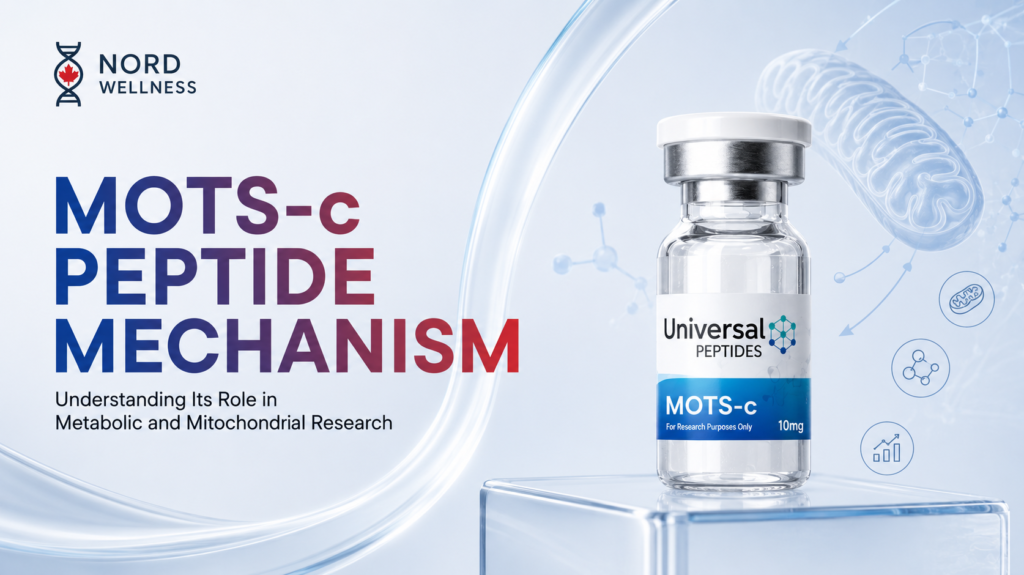
Jul
MOTS-c is a mitochondria-derived peptide (MDP) that has become a focal point in research due to its ability to regulate cellular energy metabolism and mitochondrial function. Synthesized within mitochondria, MOTS-c can act locally and systemically, influencing metabolic signaling, energy homeostasis, and stress response pathways. Its unique mechanism makes it a valuable tool in the study of obesity, insulin resistance, and age-related metabolic decline.
This article explores the mechanism of MOTS-c, how it influences cellular signaling, its impact on metabolic pathways, and its current research applications.
What Is the MOTS-c Mechanism of Action?
MOTS-c is a 16-amino acid peptide encoded by mitochondrial DNA. Its mechanism of action is based on its ability to coordinate mitochondrial and nuclear signaling to optimize cellular metabolism.
Key features of MOTS-c’s mechanism include:
- AMPK activation: Enhances glucose uptake and fatty acid oxidation.
- Mitochondrial regulation: Improves efficiency of oxidative phosphorylation and ATP production.
- Gene expression modulation: Influences nuclear genes involved in antioxidant defense and metabolic adaptation.
- Systemic metabolic effects: Modulates insulin sensitivity and lipid metabolism in muscle, liver, and adipose tissue.
This mechanism positions MOTS-c as a central regulator of cellular energy homeostasis and metabolic resilience.
? Explore MOTS-cPeptide for research purposes at MOTS-c Peptide

How MOTS-c Influences Cellular Signaling
MOTS-c communicates with both the mitochondria and nucleus to influence cellular signaling:
- Energy-sensing pathways: Activates AMPK, a key regulator of energy balance.
- Stress response pathways: Reduces reactive oxygen species (ROS) and protects mitochondrial integrity.
- Metabolic gene expression: Modulates genes involved in glucose and lipid metabolism.
- Systemic signaling: Alters metabolic processes in distant tissues via circulation.
Through these pathways, MOTS-c coordinates mitochondrial function with whole-body energy balance, enabling studies on metabolic adaptation and resilience.
Effects on Energy and Metabolic Pathways
MOTS-c’s modulation of cellular pathways impacts energy and metabolism in several ways:
- Enhanced ATP synthesis: Supports high-energy-demand tissues like skeletal muscle and liver.
- Metabolic flexibility: Promotes glucose and fatty acid utilization depending on energy availability.
- Fatty acid oxidation: Mobilizes lipids as a fuel source for energy production.
- Insulin sensitivity: Improves glucose uptake and utilization in peripheral tissues.
These effects are critical for researchers studying metabolic disorders, mitochondrial function, and cellular bioenergetics.
Research Applications of MOTS-c
MOTS-c is used in multiple research contexts, including:
- Metabolic disease studies: Obesity, diabetes, and insulin resistance models.
- Mitochondrial function research: Exploring energy production, oxidative stress, and mitochondrial health.
- Aging research: Assessing how mitochondrial regulation can influence metabolic decline and tissue resilience.
- Exercise and physiology studies: Investigating how MOTS-c modulates skeletal muscle metabolism and adaptation.
- Pharmacological modeling: Examining molecular pathways and potential therapeutic applications.
Its versatility allows researchers to investigate mitochondrial signaling, systemic metabolism, and cellular energy regulation in a controlled experimental setting.
? Explore MOTS-cPeptide for research purposes at MOTS-c Peptide

Current Scientific Understanding
Current research indicates that MOTS-c:
- Improves insulin sensitivity and glucose metabolism in preclinical models.
- Enhances mitochondrial function and ATP production.
- Reduces oxidative stress and protects against metabolic dysfunction.
- Supports systemic energy homeostasis and metabolic flexibility.
Limitations: Research is largely preclinical; human data are limited, and long-term systemic effects are not fully characterized. Further studies are required to translate these findings into clinical applications.
For a deeper exploration of MOTS-c peptide, including its mitochondrial function, metabolic health research, and benefits, read the full article: MOTS-c Peptide: Mitochondrial Function, Metabolic Health Research, and Benefits
FAQ About MOTS-c Peptide Mechanism
What is MOTS-c peptide?
MOTS-c is a mitochondria-derived peptide that regulates cellular energy metabolism, mitochondrial function, and systemic metabolic processes.
How does MOTS-c work?
It activates AMPK pathways, modulates gene expression for metabolic adaptation, enhances ATP production, and reduces oxidative stress.
Can MOTS-c act systemically?
Yes, MOTS-c can influence distant tissues, including muscle, liver, and adipose tissue, affecting whole-body metabolism.
Is MOTS-c used clinically?
Currently, MOTS-c is studied mainly in preclinical models; human applications are still experimental.
What are the research benefits of MOTS-c?
It allows scientists to study mitochondrial signaling, metabolic regulation, energy homeostasis, and potential interventions for metabolic disorders.
Final Thoughts
MOTS-c peptide is a powerful tool for mitochondrial and metabolic research, linking mitochondrial signaling with systemic energy regulation. Its ability to enhance ATP production, promote metabolic flexibility, and protect against oxidative stress makes it invaluable in studies of metabolic health, aging, and cellular bioenergetics.
Disclaimer
This content is provided by Nord Wellness for educational and research purposes only. MOTS-c Peptide is not approved for the diagnosis, treatment, cure, or prevention of any disease.



This was an excellent explanation of the mechanism behind MOTS-c. I appreciated how the article clearly explained AMPK activation, mitochondrial-to-nuclear signaling, and the peptide’s role in cellular energy regulation without overstating the current evidence. The focus on molecular mechanisms made the content both informative and easy to follow.
Great article overall. Many resources describe MOTS-c as an exercise-mimetic peptide, but this article went much further by explaining the underlying signaling pathways and stress-adaptation mechanisms. I especially liked the discussion of metabolic homeostasis and mitochondrial communication, which added valuable scientific context.
Really enjoyed reading this article. The explanation of mitochondrial signaling, gene regulation, and metabolic adaptation was detailed enough to be educational while remaining accessible to readers who are new to peptide science. I’d love to see a future article comparing the mechanisms of MOTS-c with other mitochondrial-derived peptides such as Humanin or SS-31.