AOD-9604 is a synthetic peptide derived from the C-terminal fragment of human growth hormone (hGH) that has become a focus of research for its fat-specific metabolic effects. Unlike full-length growth hormone, AOD-9604 selectively stimulates lipolysis without significantly affecting blood glucose or IGF-1 pathways, making it a valuable tool for studying adipocyte function, energy regulation, and obesity-related mechanisms.
This article provides an in-depth look at AOD-9604’s mechanism of action, how it influences metabolic activity, comparisons with related peptides, and its applications in research.
What Is the AOD-9604 Mechanism of Action?
AOD-9604 is a modified fragment of human growth hormone (amino acids 177–191). Its mechanism is designed to selectively mimic the fat-reducing effects of GH while avoiding systemic anabolic effects.
Key aspects of its mechanism include:
Lipolytic activation: Stimulates enzymatic pathways in adipocytes responsible for breaking down triglycerides into free fatty acids and glycerol.
Selective metabolic effect: Targets fat cells specifically without significantly influencing IGF-1 or glucose metabolism.
Peptide stability: Its structure allows research-focused studies in vitro and in vivo, providing consistent and measurable effects on lipid metabolism.
Through these actions, AOD-9604 enables researchers to study fat-specific metabolic processes independently from full-length growth hormone effects. As a result, it provides a controlled model for investigating adipocyte function, lipid mobilization, and energy regulation.
? Explore AOD-9604 Peptide for research purposes atAOD-9604 Peptide
How AOD-9604 Influences Metabolic Activity
AOD-9604 exerts its effects primarily by enhancing lipolysis in adipose tissue, contributing to energy mobilization and metabolic regulation. Specifically, this involves:
Triglyceride breakdown: Stimulates the conversion of stored fats into free fatty acids and glycerol.
Fatty acid mobilization: Released fatty acids can be utilized for energy in cellular metabolism.
Energy homeostasis: Supports overall metabolic balance without impacting glucose or insulin levels.
Adipocyte function: Helps researchers analyze fat cell signaling and metabolic regulation in controlled models.
By isolating these fat-specific effects, AOD-9604 provides a precise method for investigating adipocyte biology and energy metabolism. As a result, researchers can study lipid mobilization and metabolic regulation with minimal interference from other hormonal pathways.
Research on Fat Metabolism Pathways
Studies on AOD-9604 focus on how it modulates pathways involved in lipid breakdown and energy utilization:
cAMP-mediated lipolysis: Activation of intracellular signaling that drives triglyceride hydrolysis.
Mitochondrial energy metabolism: Released fatty acids feed into β-oxidation pathways, supporting cellular ATP production.
Metabolic regulation models: Helps dissect the interactions between adipocyte activity, energy balance, and fat accumulation.
Obesity and metabolic disease studies: Provides insights into potential mechanisms for reducing adipose tissue in research models.
These pathways highlight AOD-9604’s utility in studying fat-specific metabolic control. In other words, they provide a targeted framework for investigating adipocyte function and lipid regulation in research models.
? Explore AOD-9604 Peptide for research purposes atAOD-9604 Peptide
AOD-9604 Compared With Related Peptides
AOD-9604 is often compared with other growth hormone-derived or GH-related peptides, such as full-length GH, GHRP-6, or Ipamorelin:
Feature
AOD-9604
Full-Length GH
GHRP-6 / Ipamorelin
Target
Fat-specific lipolysis
Broad GH effects
Pituitary GH stimulation via ghrelin receptor
Glucose/IGF-1 impact
Minimal
High
Moderate
Mechanism
Activates fat cell lipolytic pathways
Endocrine GH effects
Stimulates GH release systemically
Duration
Short/moderate, controlled
Longer, systemic
Short pulses
This comparison emphasizes AOD-9604’s specificity for adipocyte metabolism, making it a precise tool for fat-targeted research. In particular, it allows researchers to investigate lipid mobilization and energy regulation without broader hormonal effects.
Research Applications of AOD-9604
AOD-9604 is utilized in multiple research contexts. For example, these include studies on fat metabolism, energy balance, adipocyte function, and metabolic regulation.
Fat metabolism studies: Understanding the molecular mechanisms of adipocyte lipid breakdown.
Energy homeostasis research: Evaluating the mobilization of fatty acids for cellular energy production.
Obesity and metabolic disorder models: Investigating targeted fat reduction pathways.
Experimental pharmacology: Studying peptide stability, dosing, and tissue-specific effects.
Its specificity allows researchers to dissect fat-specific metabolic mechanisms without systemic hormonal interference. In this way, it provides a controlled model for studying adipocyte function and lipid metabolism.
AOD-9604 is a synthetic fragment of human growth hormone that selectively stimulates fat metabolism without significantly affecting glucose or IGF-1 levels.
How does AOD-9604 work?
It activates lipolytic pathways in adipocytes, promoting the breakdown of triglycerides and mobilization of fatty acids for energy. As a result, it serves as a model for studying fat metabolism and energy regulation in research settings.
Can AOD-9604 affect overall metabolism?
Yes, it influences energy balance by increasing fatty acid availability while leaving glucose metabolism largely unchanged.
Is AOD-9604 used clinically?
Currently, it is primarily used in research and preclinical studies. Consequently, human therapeutic applications remain experimental.
Why is AOD-9604 important in research?
It allows scientists to study fat-specific metabolism and adipocyte biology without the confounding effects of full-length growth hormone. As a result, researchers can focus on targeted pathways in lipid mobilization and energy regulation.
Final Thoughts
AOD-9604 peptide provides a highly targeted research tool for fat metabolism, energy regulation, and adipocyte function. Its selective mechanism, minimal systemic effects, and ability to mobilize fatty acids make it invaluable in metabolic, obesity, and cellular energy research.
Disclaimer
This content is provided by Nord Wellness for educational and research purposes only. AOD-9604 Peptide is not approved for the diagnosis, treatment, cure, or prevention of any disease.
admin
0 thoughts on “AOD-9604 Peptide Mechanism: Understanding Its Role in Fat Metabolism Research”
Cameron Richardson says:
This was a very well-written explanation of the mechanism behind AOD-9604. I appreciated how the article explained the peptide’s proposed role in fat metabolism, including lipolysis and lipogenesis, while keeping the discussion grounded in current research. The balanced, science-focused approach made a complex topic much easier to understand.
Great article overall. Many resources introduce AOD-9604 but don’t explain why its mechanism differs from full-length growth hormone. I especially liked the discussion of its proposed signaling pathways and why researchers continue to investigate its metabolic effects independently of the GH/IGF-1 axis.
Really enjoyed reading this article. The explanation of peptide biology, adipose tissue signaling, and metabolic research was detailed enough to be educational while remaining easy to follow. I’d love to see a future article comparing AOD-9604 with other metabolism-focused peptides from a mechanistic perspective.
New Year, New You! Ready to kickstart your wellness journey? Join our newsletter for exclusive tips, fitness inspiration, and special offers—let’s make this your best year yet!


 ChatGPT
 Claude
 Perplexity
 Google AI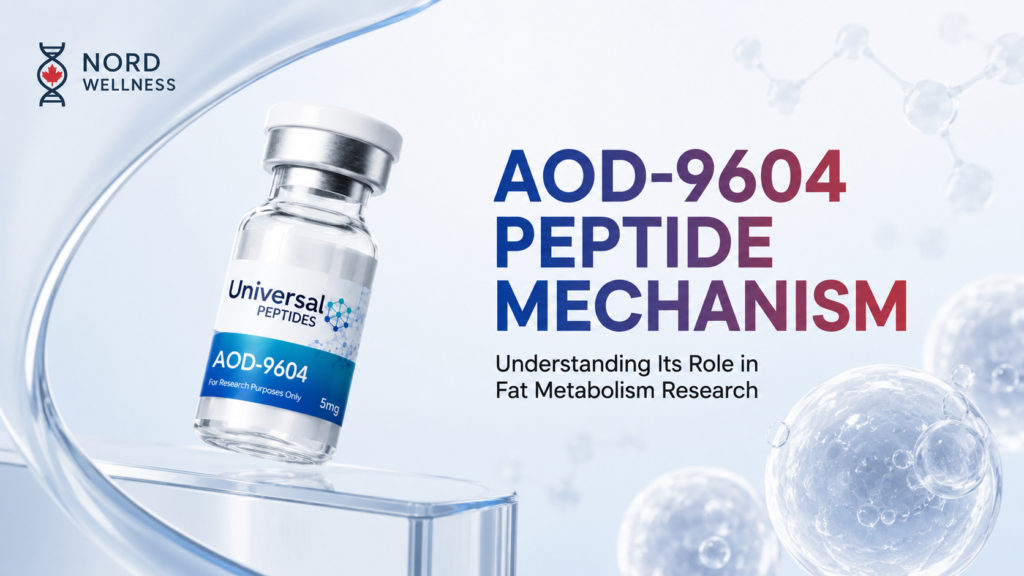



This was a very well-written explanation of the mechanism behind AOD-9604. I appreciated how the article explained the peptide’s proposed role in fat metabolism, including lipolysis and lipogenesis, while keeping the discussion grounded in current research. The balanced, science-focused approach made a complex topic much easier to understand.
Great article overall. Many resources introduce AOD-9604 but don’t explain why its mechanism differs from full-length growth hormone. I especially liked the discussion of its proposed signaling pathways and why researchers continue to investigate its metabolic effects independently of the GH/IGF-1 axis.
Really enjoyed reading this article. The explanation of peptide biology, adipose tissue signaling, and metabolic research was detailed enough to be educational while remaining easy to follow. I’d love to see a future article comparing AOD-9604 with other metabolism-focused peptides from a mechanistic perspective.
Pingback: AOD-9604 Peptide: Mechanism, Fat Metabolism Research, and Scientific Applications - nordwellness.is