

5-amino-1mq, Peptides, Weight Management & Metabolic Health
How 5-Amino-1MQ Works: Mechanism of Action, Metabolism, and Research Insights
Summarize the article with:
 ChatGPT
 Claude
 Perplexity
 Google AI
Aug
Understanding how 5-Amino-1MQ works begins with nicotinamide N-methyltransferase (NNMT), an enzyme involved in nicotinamide metabolism and cellular methyl-donor balance. 5-Amino-1MQ inhibits NNMT, allowing researchers to investigate its relationship with NAD+ metabolism, S-adenosylmethionine (SAM), adipocyte biology, and lipid accumulation.
Although frequently discussed alongside research peptides, 5-Amino-1MQ is not a peptide. It is a small-molecule compound studied primarily in preclinical models. Therefore, findings related to metabolism and body composition should be interpreted as experimental observations rather than established human benefits.
Explore Nord Wellness for additional research-focused compounds and educational resources.
What Is 5-Amino-1MQ?
5-Amino-1MQ, or 5-amino-1-methylquinolinium, is a small-molecule inhibitor of nicotinamide N-methyltransferase (NNMT). Researchers study this enzyme because it connects nicotinamide metabolism with cellular methyl-donor pathways and has been investigated in adipose and metabolic biology.
NNMT catalyzes the transfer of a methyl group from SAM to nicotinamide. This reaction produces 1-methylnicotinamide (1-MNA) and S-adenosylhomocysteine (SAH):
Nicotinamide + SAM → 1-MNA + SAH
This reaction matters because nicotinamide also participates in the NAD+ salvage pathway, while SAM serves as an important methyl donor for many cellular processes. Therefore, changes in NNMT activity may influence how cells distribute metabolites between these pathways.
Why Researchers Study NNMT
NNMT occurs in several tissues, including adipose tissue, and research has associated its activity with metabolic regulation in experimental models. Consequently, researchers have investigated whether inhibiting NNMT can alter pathways related to nicotinamide metabolism, methyl-donor availability, and lipid accumulation.
5-Amino-1MQ provides a useful experimental tool because it targets NNMT rather than directly activating metabolic or endocrine receptors. This mechanism allows researchers to study how changes in NNMT activity influence downstream cellular processes.
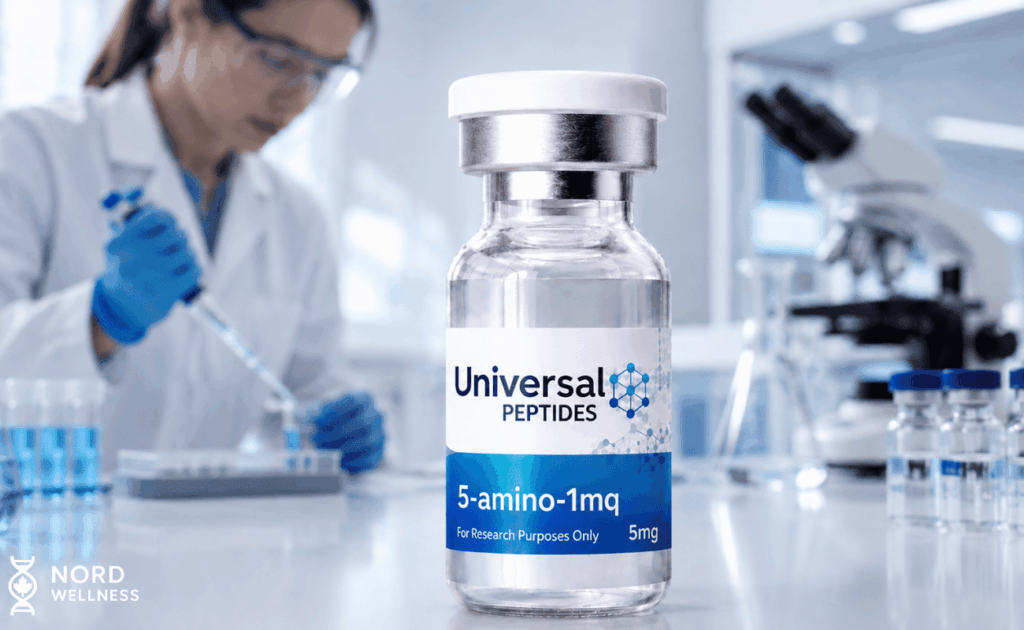
Explore 5-Amino-1MQ for research purposes at 5-amino-1mq 5mg.
How 5-Amino-1MQ Works
The central explanation of how 5-amino-1mq works is its inhibition of NNMT. By reducing NNMT activity, the compound decreases the conversion of nicotinamide into 1-MNA and may influence metabolic pathways involving NAD+ and SAM.
The mechanism can be summarized through four main stages:
| Stage | What Happens | Research Significance |
|---|---|---|
| 1. NNMT inhibition | 5-Amino-1MQ inhibits nicotinamide N-methyltransferase | Allows researchers to examine the metabolic effects of reduced NNMT activity |
| 2. Reduced 1-MNA formation | Less nicotinamide is converted into 1-MNA | Reduced 1-MNA provides evidence of NNMT target engagement |
| 3. NAD+ pathway changes | More nicotinamide may remain available for other metabolic pathways | Provides a basis for investigating NAD+-related metabolism |
| 4. SAM utilization changes | NNMT consumes less SAM during nicotinamide methylation | Allows investigation of cellular methyl-donor balance |
Step 1: NNMT Inhibition
5-Amino-1MQ acts as a small-molecule NNMT inhibitor. Because NNMT uses both nicotinamide and SAM as substrates, reducing its activity may influence several interconnected metabolic pathways.
Step 2: Reduced 1-MNA Formation
When NNMT activity decreases, less nicotinamide is converted into 1-MNA.
In cultured adipocytes, researchers observed concentration-dependent reductions in intracellular 1-MNA following 5-Amino-1MQ exposure. This makes 1-MNA an important biochemical marker of NNMT inhibition in experimental models.
Step 3: Effects on NAD+ Metabolism
Nicotinamide serves as a precursor in the NAD+ salvage pathway. Because NNMT also uses nicotinamide, inhibiting this enzyme may alter how nicotinamide is distributed between metabolic pathways.
Experimental adipocyte studies have reported changes in intracellular NAD+. However, responses varied across concentrations.
Therefore, current evidence supports investigating the relationship between NNMT inhibition and NAD+ metabolism rather than assuming that 5-Amino-1MQ consistently increases NAD+.
Step 4: Effects on SAM Availability
NNMT consumes SAM while methylating nicotinamide. Consequently, inhibiting NNMT may reduce one pathway of SAM utilization.
Experimental research has reported increased SAM under certain treatment conditions. However, these biochemical changes should not automatically be interpreted as specific epigenetic effects.
In simple terms:
5-Amino-1MQ → NNMT inhibition → reduced 1-MNA → altered nicotinamide and SAM utilization → downstream metabolic changes
This model provides a useful framework for understanding how 5-amino-1mq works, although current evidence remains predominantly preclinical.
Biological Pathways Influenced by 5-Amino-1MQ
NNMT occupies an interesting position between several metabolic systems. Consequently, researchers investigating 5-Amino-1MQ have focused on NAD+ metabolism, methyl-donor balance, and adipocyte biology.
NAD+ and Nicotinamide Metabolism
NAD+ plays an essential role in cellular redox reactions and energy metabolism. Nicotinamide contributes to pathways that regenerate NAD+, while NNMT provides an alternative route by converting nicotinamide into 1-MNA.
By inhibiting NNMT, 5-Amino-1MQ may alter how nicotinamide moves between these metabolic pathways. Experimental studies showing reduced 1-MNA and changes in intracellular NAD+ provide a basis for continued investigation.
However, researchers should avoid assuming that every NAD+-dependent biological process changes following NNMT inhibition. Demonstrating effects on specific downstream pathways requires direct experimental evidence.
SAM and Methyl-Donor Balance
Another important aspect of how 5-amino-1mq works involves SAM metabolism.
SAM supplies methyl groups for numerous cellular reactions, while NNMT consumes SAM when methylating nicotinamide. Therefore, NNMT activity can influence methyl-donor availability.
Researchers have observed changes in SAM after NNMT inhibition in adipocyte models. These results support further investigation into the connection between NNMT activity and cellular methyl-donor balance.
Still, an increase in SAM should not automatically be interpreted as improved methylation or a particular epigenetic outcome. Those conclusions would require additional evidence.
Adipocyte Biology and Lipid Accumulation
5-Amino-1MQ has also attracted attention because of experimental findings involving adipocytes.
In cultured 3T3-L1 adipocyte models, researchers found that NNMT inhibition with 5-Amino-1MQ reduced lipid accumulation during differentiation under specific experimental conditions.
Animal studies have also investigated the compound in models of diet-induced obesity, reporting changes in body weight, adipose tissue mass, and adipocyte size.
These findings help researchers explore how NNMT may participate in adipose metabolism. However, reduced lipid accumulation in cells or changes in animal body weight do not establish a human fat-loss effect.
Cell cultures and animal models cannot reproduce all aspects of human metabolism, pharmacokinetics, or long-term physiological responses.
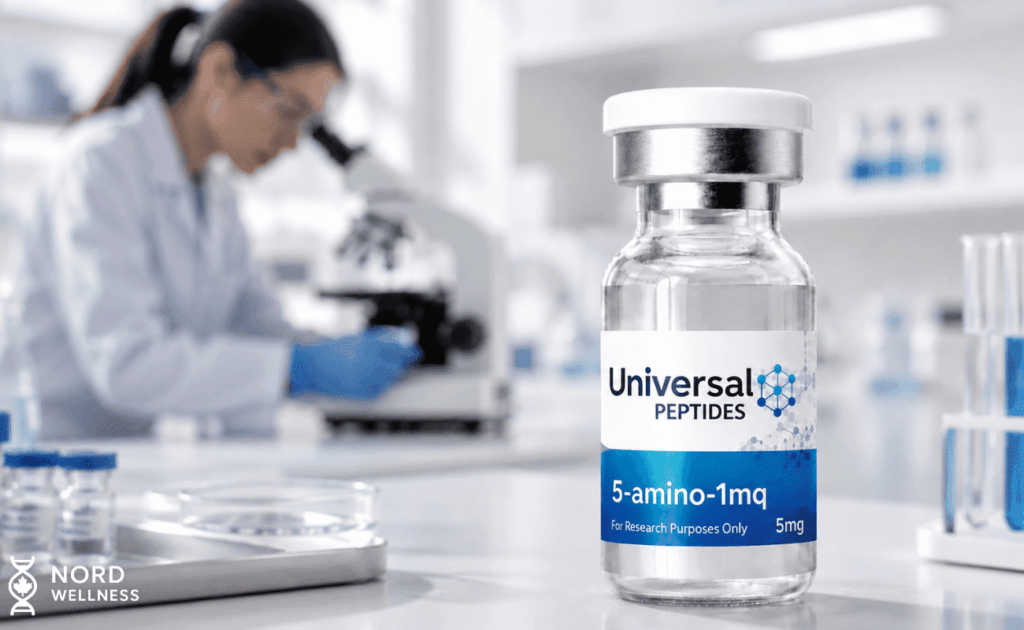
Explore 5-Amino-1MQ for research purposes at 5-amino-1mq 5mg.
Current Scientific Evidence
Current evidence explaining how 5-amino-1mq works comes primarily from biochemical experiments, cultured cells, and animal models. These studies provide useful mechanistic information but remain insufficient to establish clinical effects in humans.
Evidence From Cell Studies
Cellular experiments provide direct evidence that 5-Amino-1MQ can inhibit NNMT and influence related metabolic markers.
Researchers have reported several findings in adipocyte models, including:
- decreased intracellular 1-MNA;
- changes in intracellular NAD+;
- increased SAM under certain experimental conditions; and
- reduced lipid accumulation during adipocyte differentiation.
Together, these findings support NNMT inhibition as the compound’s primary research mechanism.
However, individual outcomes depend on experimental conditions such as concentration, exposure duration, cell model, and analytical method. Researchers should therefore interpret results within the context of each study rather than treating them as universal effects.
Evidence From Animal Models
Researchers have also investigated 5-Amino-1MQ in mice with diet-induced obesity.
A short proof-of-concept study reported changes in body weight, white adipose tissue mass, adipocyte size, and plasma total cholesterol following treatment. The researchers did not observe a significant reduction in total food intake during the experimental period.
These results support further investigation into NNMT as a metabolic research target. Nevertheless, short-duration animal experiments cannot establish equivalent effects in humans.
What Current Evidence Does Not Establish
Despite promising mechanistic findings, current research does not establish 5-Amino-1MQ as a clinically validated intervention for weight management or metabolic disease.
Existing evidence does not provide sufficient information to establish:
- effective human dosing;
- long-term human safety;
- clinical weight-management efficacy;
- human pharmacokinetics;
- long-term effects of NNMT inhibition; or
- risk-benefit profiles across different populations.
This distinction is important because biological mechanisms that produce measurable effects in cells or animals do not necessarily translate into clinically meaningful human outcomes.
Research Limitations and Considerations
Several limitations affect the interpretation of research on how 5-amino-1mq works.
First, 5-Amino-1MQ is a small molecule rather than a peptide. Its chemistry and mechanism therefore differ from peptide-based research compounds.
Second, most available evidence remains preclinical. Cell and animal studies can identify mechanisms and generate research hypotheses, but they cannot establish human efficacy or safety.
In addition, NNMT connects several metabolic systems. Changes in 1-MNA, NAD+, SAM, lipid accumulation, and adipose biology should not be reduced to a single linear pathway. Experimental outcomes can depend on the biological model, concentration, exposure duration, and other study conditions.
Therefore, current evidence supports using 5-Amino-1MQ as a research tool for investigating NNMT-related metabolic biology rather than drawing definitive conclusions about human applications.
Explore the complete guide to 5-Amino-1MQ mechanisms, metabolic research, benefits, and scientific applications
FAQ About How 5-Amino-1MQ Works
How does 5-Amino-1MQ work?
5-Amino-1MQ inhibits nicotinamide N-methyltransferase (NNMT). This reduces the conversion of nicotinamide into 1-MNA and may influence metabolic pathways involving nicotinamide, NAD+, SAM, and adipocyte biology in experimental models.
Is 5-Amino-1MQ a peptide?
No. 5-Amino-1MQ is a small-molecule compound rather than a peptide. It is frequently discussed alongside research peptides because researchers investigate it in metabolic research.
Why does 5-Amino-1MQ target NNMT?
NNMT connects nicotinamide metabolism with SAM-dependent methyl-donor pathways. Inhibiting the enzyme allows researchers to investigate how changes in these pathways affect cellular and metabolic processes.
Does 5-Amino-1MQ increase NAD+?
Experimental adipocyte studies have reported changes in intracellular NAD+ following NNMT inhibition. However, the findings do not establish a consistent increase across all experimental systems or demonstrate the same effect in humans.
How does 5-Amino-1MQ affect fat cells?
Preclinical research has reported reduced lipid accumulation during adipocyte differentiation under specific experimental conditions. Animal models have also shown changes in adipose tissue. These findings remain preclinical and should not be interpreted as established human fat-loss effects.
Are the effects of 5-Amino-1MQ proven in humans?
No. Current evidence remains predominantly preclinical. More research would be necessary to establish human pharmacokinetics, safety, dosing, efficacy, and long-term effects.
Why is 5-Amino-1MQ studied in metabolic research?
Researchers study 5-Amino-1MQ because NNMT participates in pathways involving nicotinamide metabolism, NAD+, SAM, adipocyte biology, and metabolic regulation. Selective inhibition provides a way to investigate how these pathways interact.
Final Thoughts
Understanding how 5-amino-1mq works begins with NNMT inhibition. By reducing NNMT activity, the compound decreases 1-MNA formation and can influence metabolic pathways involving nicotinamide, NAD+, SAM, and adipocyte biology.
Current cell and animal research provides useful evidence about these mechanisms. However, findings remain predominantly preclinical and do not establish human efficacy, optimal dosing, or long-term safety.
Therefore, 5-Amino-1MQ is best viewed as an experimental compound for studying NNMT-related metabolic pathways and their relationship with cellular energy and adipose biology.
Explore Nord Wellness for additional research-focused compounds and educational resources.
Disclaimer
This content is provided by Nord Wellness for educational and research purposes only. 5-amino-1mq 5mg is not approved for the diagnosis, treatment, cure, or prevention of any disease.


Really enjoyed this breakdown of how 5-Amino-1MQ is thought to work. The explanation makes the underlying biology much easier to follow, especially for readers who aren’t familiar with the research. I’d be interested in seeing more about how well the proposed mechanism is supported by current studies.
This was a helpful introduction to the science behind 5-Amino-1MQ. I liked that the article focuses on the proposed biological mechanism rather than simply listing potential benefits. A comparison between laboratory findings and any available human research would make an interesting follow-up.
I appreciate how clearly this article explains a fairly technical mechanism. There’s a lot of simplified information about 5-Amino-1MQ online, so understanding the proposed pathway provides useful context when evaluating different claims. It would be great to see a follow-up discussing the current gaps in the research.